
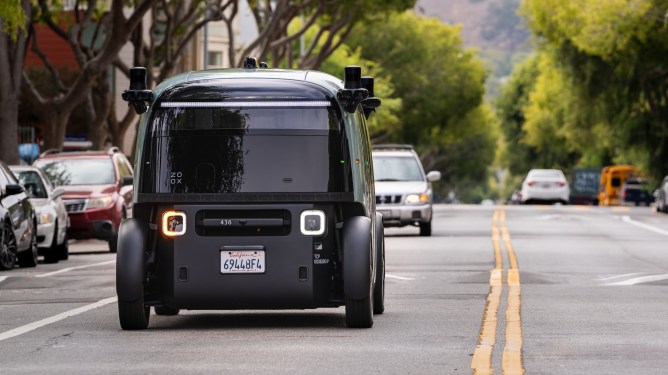
Zoox is beginning to open its robotaxi service to the public in San Francisco. The Amazon-owned company is moving closer to launching a commercial service and entering direct competition with Waymo.
The company’s custom-built robotaxis, which lack a steering wheel or pedals, have been operating on San Francisco streets for nearly a year. Until now, rides were limited to employees and their friends and family. This new phase is not a large-scale or commercial public launch. Instead, the company will invite select individuals from its waitlist to join an early rider program called Zoox Explorer. These chosen participants will gain access to the service, which is currently free.
Riders will be gradually moved off the waitlist as Zoox expands its fleet of robotaxis and its service area. The company’s stated goal is to remove the waitlist entirely by 2026. Zoox has not disclosed the number of riders being granted public access or the total size of the waitlist. Today, the company operates approximately 50 robotaxis across Las Vegas and San Francisco.
Once granted access, riders can use the Zoox app to hail a ride within its designated service area. This area currently covers the SoMA, Mission, and Design districts in San Francisco. While Zoox’s service area is very small compared to the 260 square miles served by Waymo, this public launch brings it closer to direct competition with the Alphabet-owned company.
Zoox was acquired by Amazon in 2020 and has been developing a commercial robotaxi service for over a decade. For years, its test vehicles, which were Toyota Highlanders equipped with sensors and self-driving software, were a common sight in the San Francisco Bay Area. However, it is the company’s purpose-built robotaxis from its Foster City, California base that have drawn significant public attention.
Two primary hurdles remain before Zoox can launch a commercial service. The company must first obtain a permit from the California Public Utilities Commission, which regulates ride-hailing services, to charge for rides in the state. Secondly, Zoox must convince the National Highway Traffic Safety Administration to permit the use of its custom-built robotaxis for commercial operations.
The company has already made progress at the federal level. In August, NHTSA granted Zoox an exemption to demonstrate its custom-built robotaxis on public roads. This decision resolved a long-standing debate over whether the vehicles complied with federal motor vehicle safety standards, which traditionally require features like steering wheels and pedals. This exemption allows Zoox to offer free rides, but it cannot charge for them until NHTSA expands the exemption to cover commercial operations.