
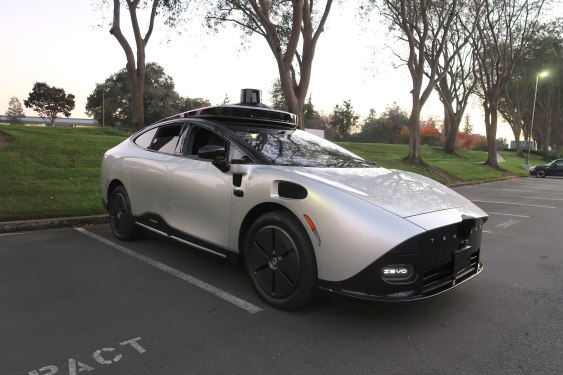
Driverless cars are no longer confined to science fiction. Companies like Waymo have already deployed commercial robotaxi services in several cities. Meanwhile, numerous automakers are working to bring that same level of autonomy to personally-owned vehicles in the coming years.
This shift raises an exciting question: what could you do with a personal autonomous vehicle? You might send it to pick up food or run errands, a concept championed by companies like Autolane. Others, like Tesla CEO Elon Musk, envision owners deploying their cars to offer rides to others, creating a nearly effortless side business.
Hebron Sher, co-founder of the Dallas-based company Zevo, is eager to capitalize on these possibilities. Zevo has operated an electric vehicle-only car-share fleet for over a year and is now adding robotaxis to its network, starting with a new company called Tensor.
Tensor is an unusual startup. It emerged earlier this year from a previous Silicon Valley startup called AutoX, which also had operations in China. Tensor boldly claims it will be the first to sell a fully autonomous car to regular consumers by 2026. Zevo has announced plans to purchase up to 100 of Tensor’s cars for its network.
Specific timing details are scarce, and Tensor must still prove it can manufacture vehicles at scale with reliability, significant hurdles that have challenged many other newcomers. The company stated that its path to shipping is driven by the pacing of global regulatory approvals, not product limitations. If successful, Zevo customers could borrow these Tensor vehicles in a decentralized robotaxi service.
This announcement echoes the ambitious, often unmet promises made a decade ago when self-driving car hype first peaked. However, with real robotaxis now on the roads, the idea feels more tangible today.
Tensor’s chief business officer, Hugo Fozzati, said the company’s vision is to build a future where everyone owns their own Artificial General Intelligence, enabling more time, freedom, and autonomy. He described the partnership with Zevo as not just a vehicle sale, but a way for individuals to participate and profit from the autonomous vehicle business.
This is not Sher’s first bet on an unproven company. Last October, Zevo announced a non-binding order for 1,000 vans from the struggling EV startup Faraday Future. Faraday, which has faced challenges for a decade, recently began importing more affordable electric vans from China for assembly in the United States.
Sher’s willingness to partner with these companies stems from two main reasons. The first is cost: companies like Tensor and Faraday Future, with nonexistent or troubled track records, are willing to offer attractive deals. More importantly, Sher notes these startups are more willing than major automakers to allow deep integration with their vehicle software, which is crucial for peer-to-peer sharing and robotaxi operations.
He finds it tougher to get legacy automakers to be similarly flexible, criticizing their technology. Sher enjoys the synergy of startups working together to build solutions side by side.
Sher frames the Tensor deal as mutually beneficial. Tensor gains an early customer and a chance to prove its technology, while Zevo gets a favorable deal and the software integration it requires. He acknowledges, however, that it is a calculated risk, reflecting the entrepreneurial spirit that encourages startups to take chances.
This story has been updated to clarify that AutoX was headquartered in Silicon Valley.