
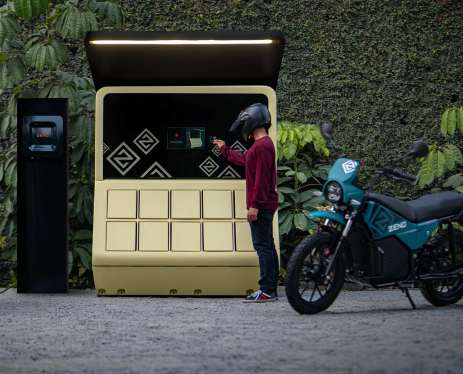
The EV transition might have hit a hurdle in the U.S., but it is not slowing down in East Africa. Several startups are vying for a piece of the burgeoning electric motorbike market there. Zeno is one of those companies, and this week it announced a 25 million dollar Series A round to expand its app-controlled battery-swap network and produce more of its Emara motorcycles.
About 20.5 million dollars of the total was an equity fundraise, led by Congruent Ventures with participation from Active Impact and Lowercarbon Ventures. The remaining 4.5 million is a debt facility from Camber Road and Trifecta Capital. Zeno had previously raised a 9.5 million dollar seed round led by Lowercarbon Ventures and Toyota Ventures.
Since emerging from stealth a year and a half ago, Zeno has built more than 800 of its Emara motorbikes and set up more than 150 charging locations across four countries in East Africa. Motorbikes are a cornerstone of transportation in the region, and Zeno is betting it can attract riders by offering 50 percent lower operating costs than internal combustion bikes. The company said more than 25,000 retail and fleet customers are waiting to get an Emara, and it is producing about 70 to 80 bikes per week. The new funding will be used to fulfill that demand.
The Zeno Emara can drive about 100 kilometers, or 60 miles, on a single charge and can carry up to 250 kilograms, or 550 pounds. The bike sells for about 1,300 dollars without a battery and about 2,000 dollars with one. It provides 8 kilowatts of peak power, about the same as a 150 cc internal combustion engine. Because all of its torque is available from a standstill, it can go up steep hills fully laden, which is a boon for bodaboda operators who routinely ferry passengers and cargo.
Customers who forgo the battery at purchase can subscribe to a monthly or pay-per-use plan. They can charge the bikes at home or at one of Zeno’s swap stations. Similar to other companies, Zeno is selling a range of accessories and wraps so buyers can customize their rides.
To sweeten the deal, Zeno also plans to offer a battery dock that homes and businesses can use to power lights and appliances. The dock is currently being prototyped, and about a dozen customers are testing the product. If Zeno can commercialize the battery dock, it could entrench itself in the region’s electrical infrastructure. Much of East Africa’s power grid is in poor shape, which has provided an opening for companies to offer more modular power products.
When the company’s co-founder started Zeno, he drew inspiration from his previous employer, Tesla, and its first master plan, which sought to deploy EVs and clean power at scale. The idea has more legs and more room to run with lower hurdles in emerging markets.