
The ground beneath our feet holds immense energy. Experts at the Department of Energy believe geothermal power could generate 60 gigawatts, or nearly 10% of U.S. electricity, by 2050. However, Carl Holland, co-founder and CEO of Zanskar, thinks that lofty number is too low. He argues it underestimates the potential of conventional geothermal energy.
The DOE’s projection relies on advances in enhanced geothermal systems, which use techniques to access hot rock deep underground. This approach, pursued by several companies, has significant potential. In contrast, conventional geothermal, which taps naturally occurring hotspots, has been stagnant. It currently generates just 4 gigawatts in the United States, having grown only about a gigawatt in the last decade.
Holland states that conventional geothermal has been held back by outdated assumptions. He believes experts have underestimated the number of undiscovered systems, possibly by an order of magnitude or more. With modern drilling techniques, each discovered system could yield far more power. This combination could transform the opportunity from tens of gigawatts to a terawatt-scale resource.
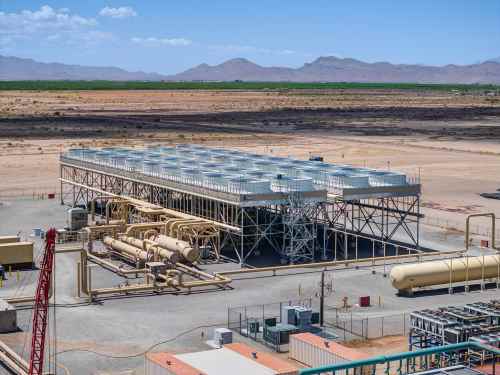
Zanskar is using artificial intelligence to revitalize conventional geothermal exploration. The startup has already used its technology to resuscitate a struggling power plant in New Mexico and has discovered two new sites with over 100 megawatts of combined potential.
These successes helped Zanskar secure a $115 million Series C funding round led by Spring Lane Capital, with participation from numerous other investment firms.
Many potential geothermal sites have been overlooked because explorers looked for surface evidence like hot springs or volcanoes. Holland notes that about 95% of all geothermal systems lack such obvious signs, meaning they are often found by accident. This is where AI becomes a powerful tool.
To find new resources, Zanskar first feeds supervised machine learning models a wide range of data, including past accidental discoveries. When a promising site is identified, a team is sent to validate it. For development planning, the company uses another AI approach called Bayesian evidential learning. This method builds and tests hypotheses to calculate probabilities, using a geothermal simulator to fill in data gaps.
So far, the approach is working. The previous funding round allowed exploration of three sites, all considered successes. Zanskar’s CTO, Joel Edwards, now wonders what will happen when they try ten.
The company has a pipeline of sites that could support at least a gigawatt of generating capacity, currently focused on the U.S. West. Holland aims to find at least ten confirmed sites to attract project finance investors, who provide lower-cost capital than venture capitalists. Success here could help the company navigate the financial challenges that have doomed other climate tech startups.
While Holland acknowledges that Zanskar hasn’t solved every challenge in geothermal exploration, he is optimistic. He believes their AI-driven method represents the future of exploration and will change the geothermal industry very quickly.