
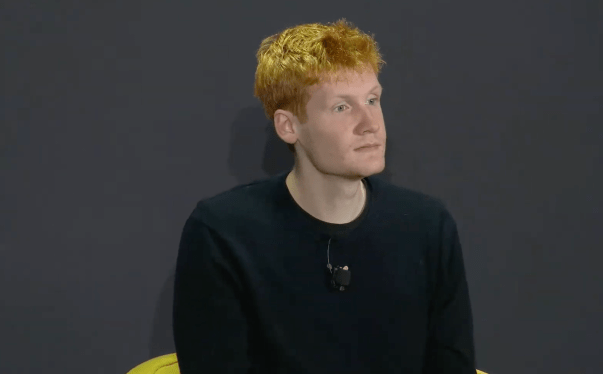
Anysphere, the company behind the popular AI coding assistant Cursor, is not considering an initial public offering anytime soon. This was stated by its co-founder and CEO Michael Truell on stage at Fortune’s AI Brainstorming conference. Despite reaching one billion dollars in annualized revenue last November and raising 2.3 billion dollars at a 29.3 billion dollar valuation last month, Truell said the company remains focused on building more features.
He highlighted that Cursor’s own in-house large language models are designed to support specific products. The company confirmed the existence of these models in November, claiming they now generate more code than almost any other LLMs in the world. Truell made these comments when asked how Cursor plans to compete with major LLM makers like OpenAI and Anthropic, which have their own AI coding tools.
He compared those competitors’ coding products to “a concept car,” while describing Cursor as a production automobile. Truell explained that Cursor takes the best intelligence available from multiple market providers, combines it with its own product-specific models, and integrates everything into the best tools and user experience for working with AI.
Cursor’s reliance on its competitors’ models and its need to build its own LLMs has been a topic of speculation among Silicon Valley investors. This speculation intensified earlier this year when OpenAI reportedly considered acquiring Anysphere, an idea the company turned down. Investors have noted that AI coding editors often lose money due to high costs paid to model makers.
In response, Cursor adjusted its pricing in July to a usage-based model, directly passing API fees from model makers to its users. This shift from an all-inclusive subscription caused some upset among customers. Regarding this pricing change, Truell explained that as users began relying on Cursor for hours of work instead of quick questions, the pricing model had to evolve toward consumption.
To address this, the company is developing cloud-computing-like cost-management tools. These tools will allow enterprises to monitor total usage and track the bills their engineers generate. Truell mentioned that an internal team is dedicated to building enterprise features like spend controls and billing visibility.
Looking ahead, Truell said Cursor is focused on two major areas for the next year. The first is handling more complex agentic functions. The goal is for Cursor to take on complete end-to-end tasks that are simple to specify but difficult to execute, such as fixing certain bugs that could normally take weeks of a developer’s time.
The second area involves shifting focus to serve entire teams as the fundamental unit, rather than individual coders. This suggests a growing emphasis on its enterprise business. Beyond cost-monitoring, Truell wants Cursor to manage more parts of the software development lifecycle outside of just writing code. He pointed to its code review product, which some customers use to analyze every pull request, as an example of this expansion.
Meanwhile, major competitors are also advancing in the agentic space. Amazon recently previewed a coding tool it says can run autonomously for days. Just this week, leading AI companies including Anthropic, OpenAI, Microsoft, and AWS launched a new consortium under the Linux Foundation to develop open-source agentic interoperability standards, contributing projects like Anthropic’s Model Context Protocol.
While these plans may not propel Anysphere far ahead of its main model-maker competitors, they should keep the company competitive in the race.