
The AI talent wars show no signs of slowing, with companies making headlines weekly for their latest high-profile hires. This includes engineers poached from competitors and entire teams acquired, but also, increasingly, senior executives who can support these firms as they scale up.
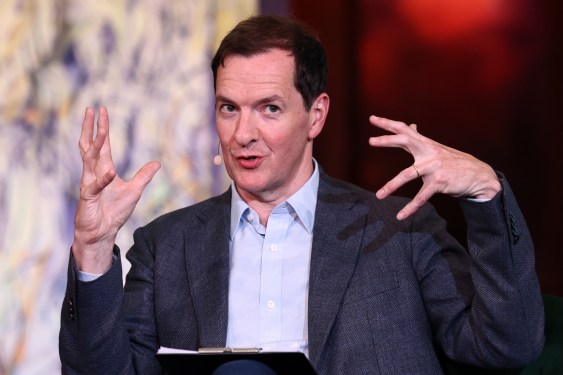
Less than ten days after Slack CEO Denise Dresser became OpenAI’s chief revenue officer, former British finance minister George Osborne announced he was joining Sam Altman’s company. Shortly thereafter, the crypto exchange Coinbase separately appointed Osborne to lead its internal advisory council.
The announcements drew particular attention in the United Kingdom, where commenters noted that Osborne joins a growing list of former British politicians now working for major U.S. tech companies.
What has Osborne’s career looked like? A former Conservative Member of Parliament, George Osborne served as Chancellor of the Exchequer from 2010 to 2016, a role equivalent to a finance minister or treasury secretary. After Prime Minister David Cameron resigned following the 2016 Brexit vote, Osborne eventually left public office in 2017.
Alongside other engagements, including a part-time advisory role for the investment firm BlackRock, he served as editor of the Evening Standard from 2017 to 2020. During that period, he also co-founded a venture capital firm, 9yards Capital, with his brother and another partner. Several companies in 9yards’ portfolio have gone public since then, including Robinhood, Toast, and Coinbase.
What is his new role at OpenAI? Osborne announced he was joining OpenAI as managing director and head of OpenAI for Countries, based in London. He will help expand existing partnerships and build new ones.
OpenAI for Countries is an initiative through which the AI company partners with governments looking to build in-country data center capacity and localize ChatGPT for their language and culture. It is an extension of the Stargate project, a large-scale initiative to build new data centers. Beyond infrastructure, its stated goal is to support countries that prefer to build on democratic AI rails.
As OpenAI turns ten years old, it is hiring talent with established networks and reach. An Oxford graduate, Osborne fits this bill. His podcast with former Labour shadow chancellor Ed Balls underscores his extensive political connections.
His track record and contacts could be even more directly relevant for Coinbase, where he will now play a more active role in helping with policymakers globally. Staying on the right side of regulators is critical for crypto exchanges like Coinbase and for OpenAI as AI gains a foothold in government agendas.
The pattern to watch is that Osborne’s latest role immediately drew parallels with other high-profile British politicians who joined major U.S. tech companies. These include former deputy Prime Minister Nick Clegg, who served as Meta’s policy chief, and former Prime Minister Rishi Sunak taking on advisory roles with Microsoft and AI firm Anthropic.
This trend raises different concerns depending on your perspective. Some critics worry about active Members of Parliament potentially advocating for U.S. corporate interests while still in government. Others take issue with former officials leveraging their government experience and connections to secure lucrative private sector positions.
The revolving door phenomenon between government and the private sector is not new, but it has attracted heightened scrutiny in Europe, especially when controversial foreign companies hire former officials to help navigate regulations.
Seen from another angle, this is simply a matter of leveraging skills and experience. Osborne’s venture firm bio notes he devised regulations that positioned the U.K. as a global fintech leader.
Others view Osborne’s career moves more critically, pointing to his controversial austerity policies and a history of ethics concerns around the revolving door. For example, when he took the Evening Standard editor job, he failed to seek approval from the government’s ethics watchdog first.
His attitude at the time was telling, as he declared he did not want to spend his life just being an ex-chancellor. That mindset of transitioning quickly from public service to high-paying private roles is precisely what makes his OpenAI and Coinbase appointments part of a broader pattern that concerns ethics watchdogs today.