
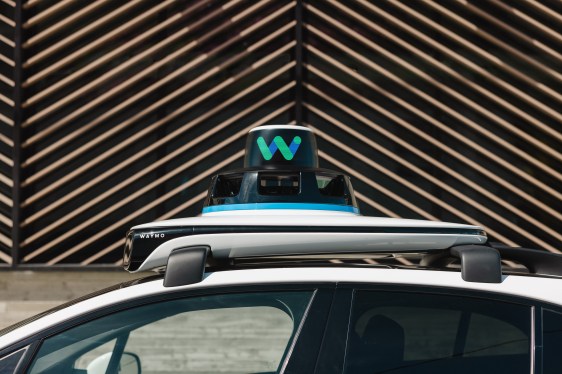
Waymo appears to be testing the integration of Google’s Gemini AI chatbot into its robotaxis. This effort aims to create an AI assistant that would accompany riders and answer their questions, according to findings by researcher Jane Manchun Wong.
While examining Waymo’s mobile app code, Wong discovered the complete system prompt for its unreleased Gemini integration. The internal document, titled “Waymo Ride Assistant Meta-Prompt,” is a specification over 1,200 lines long that defines exactly how the AI assistant is expected to behave inside a vehicle.
Although the feature has not been released in public builds, Wong states the system prompt indicates this is more than a simple chatbot. The assistant is designed to answer questions, manage certain in-cabin functions like climate control, and provide reassurance to riders if needed.
A Waymo spokesperson, Julia Ilina, commented that the team is always experimenting with features to improve the rider experience, but did not confirm any specific plans for release.
This would not be the first use of Gemini by the Alphabet-owned self-driving company. Waymo has previously used Gemini’s capabilities to train its autonomous vehicles to handle complex, rare, and high-stakes driving scenarios.
According to Wong, the assistant is instructed to have a clear identity as a friendly and helpful AI companion integrated into the vehicle, with the primary goal of enhancing the rider’s experience in a safe and unobtrusive way. It is directed to use clear, simple language and to keep responses succinct.
When activated via the in-car screen, the assistant can use personalized greetings with the rider’s first name and access contextual data, such as the rider’s trip history with Waymo.
The current system prompts allow Gemini to access and control in-car features like temperature, lighting, and music. Notably, functions like volume control, route changes, seat adjustment, and window control are absent. If a rider requests an unsupported feature, the bot is to reply with aspirational phrases stating it cannot perform that action yet.
The assistant is also directed to maintain a clear distinction between its own identity as Gemini and the autonomous driving technology, known as the Waymo Driver. For example, it should not take credit for the vehicle’s perception abilities.
The extensive prompts include guidance on how to handle questions about competitors, which keywords will stop a conversation, and how to avoid commenting on specific driving events or performance. The assistant is not to act as a spokesperson for the driving system.
It is permitted to answer general knowledge questions, but is not allowed to perform real-world actions like ordering food or handling emergencies.
Waymo is not alone in exploring AI assistants for driverless vehicles. Tesla is integrating a similar assistant using xAI’s Grok. The two approaches appear to differ, with Gemini programmed to be pragmatic and ride-focused, while Grok is pitched more as a conversational companion.