
Even three years after the generative AI boom began, most AI startups still earn their revenue by selling to businesses rather than to individual consumers. While general-purpose tools like ChatGPT saw rapid consumer adoption, most specialized consumer AI applications have struggled to find a lasting audience.
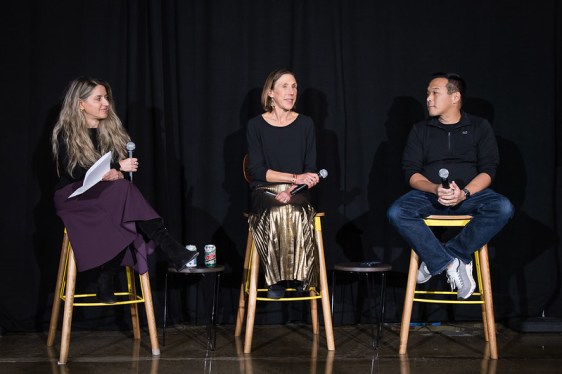
Chi-Hua Chien, co-founder and managing partner at Goodwater Capital, reflected on this trend. He noted that many early AI applications for video, audio, and photos were initially impressive. However, with the release of advanced models like Sora and the open-sourcing of video technology, many of those standalone consumer opportunities vanished.
Chien draws a comparison to the early days of the iPhone. When the iPhone launched, simple third-party apps like a flashlight were popular downloads, but they quickly became obsolete once such features were integrated directly into the iOS platform. He argues that AI platforms now need a similar period of stabilization before truly game-changing consumer products can emerge.
He believes the industry is on the cusp of a era comparable to mobile in 2009 or 2010, which gave birth to massive consumer businesses like Uber and Airbnb. Signs of this stabilization may already be appearing, such as Google’s Gemini reaching technological parity with ChatGPT.
Elizabeth Weil, founder and partner at Scribble Ventures, agrees with this assessment. She describes the current state of consumer AI as being in an awkward teenage middle ground.
A key question is what will allow consumer AI startups to mature. One possibility is the arrival of a new type of device beyond the smartphone. Chien suggested that a device picked up hundreds of times a day but which sees only a tiny fraction of a user’s world may be too limited to fully leverage AI’s capabilities. Weil agreed, noting the smartphone is not an ambient device and may not be the primary platform for AI in five years.
This belief has spurred a race to build a new personal device. OpenAI and Apple’s former design chief Jonny Ive are reportedly working on a screenless, pocket-sized device. Meta is developing smart glasses controlled by a gesture-detecting wristband. Meanwhile, several startups have attempted, often with disappointing results, to introduce AI pins, pendants, or rings.
However, not every successful consumer AI product will require a new device. Chien pointed to the potential for a personalized AI financial advisor tailored to an individual’s specific needs. Weil anticipates the rise of a personalized, always-on AI tutor, delivered directly through a smartphone.
Despite their excitement for AI’s potential, both expressed skepticism about new AI-powered social networks. Chien referenced stealth startups building networks where thousands of AI bots interact with user content. He argued this turns social media into a single-player game, which may not work because the core appeal of social networking is the knowledge that real humans are on the other side.