
When Will Bruey talks about the future, the timelines are shorter than most might imagine. The Varda Space Industries CEO predicts that within ten years, someone could stand at a landing site and watch multiple specialized spacecraft per night zooming toward Earth like shooting stars, each carrying pharmaceuticals manufactured in space. Within fifteen to twenty years, he says, it will be cheaper to send a working-class human to orbit for a month than to keep them on Earth.
The reason Bruey thinks these scenarios are realistic is because he has watched ambitious business projections unfold before while working as an engineer at SpaceX. He recalls the early days of the Falcon 9 rocket, which has since completed nearly six hundred successful missions. He says that the idea of reusable rockets and daily flights seemed like a fifteen to twenty year goal back then, and the current vision for Varda feels similarly futuristic yet achievable.
Varda has already proven its core concept. In February 2024, after a months-long regulatory process, the company became only the third corporate entity ever to bring something back from orbit, joining SpaceX and Boeing. It successfully returned crystals of ritonavir, an HIV medication. The company has completed a handful of missions since.
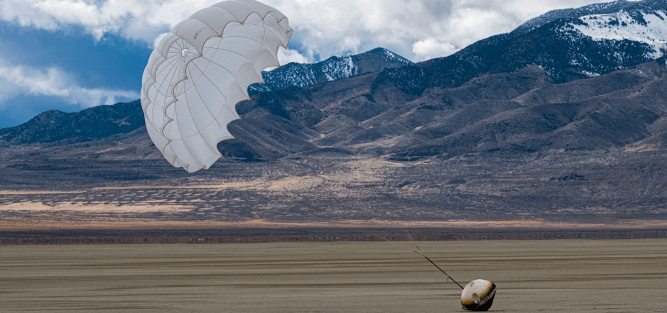
The company brings its pharmaceuticals back to Earth inside the W-1 capsule. This is a small, conical spacecraft about ninety centimeters across, seventy-four centimeters high, and weighing less than ninety kilograms, roughly the size of a large kitchen trash can. Varda launches these capsules on an ad-hoc basis aboard SpaceX rideshare missions. The capsules are hosted by a Rocket Lab spacecraft bus that provides power, communications, propulsion, and control while in orbit.
So why manufacture crystals in space? In microgravity, the usual forces that interfere with crystal formation on Earth, like sedimentation and gravity pulling on growing crystals, essentially disappear. Varda says this gives it much more precise control over crystallization, allowing it to create crystals with uniform sizes or even novel polymorphs, which are different structural arrangements of the same molecule. These improvements can translate into real benefits like better stability, greater purity, and a longer shelf life for drugs.
The process is not quick. Pharmaceutical manufacturing can take weeks or months in orbit. But once it is complete, the capsule detaches from the spacecraft bus and plunges back through Earth’s atmosphere at over thirty thousand kilometers per hour, reaching speeds above Mach 25. A heat shield made of a NASA-developed carbon ablator material protects the cargo inside, and a parachute brings it down for a soft landing.
Bruey says people often misunderstand Varda. The company is not in the space industry, he says, but rather in-space industry. Space is just another place to ship to. He proposes that the actual business is quite prosaic. He suggests imagining a bioreactor or an oven with the usual knobs for temperature, stir rate, and pressure, and explains that Varda is simply adding a gravity knob. He says to forget about space for a second and just think of it as a magic oven in the back of a warehouse where you can create formulations that you otherwise could not.
It is worth noting that Varda is not discovering new drugs or creating new molecules. It is aiming to expand the menu of what can be done with existing, approved drugs. This is not speculative science. Companies like Bristol Myers Squibb and Merck have been running pharmaceutical crystallization experiments on the International Space Station for years, proving the concept works. Varda says it is just making it commercial by building the infrastructure to do it repeatedly, reliably, and at a scale that might actually matter to the pharmaceutical industry.
Two things have changed to make this possible now. First, space launches have become bookable and predictable. Bruey explains that ten years ago, getting to orbit was like hitchhiking if you were not a primary mission payload. It is still expensive today, but it is dependable, and companies can book launch slots years in advance. Second, companies like Rocket Lab started producing satellite buses that could be purchased off the shelf. Buying Photon buses from Rocket Lab and integrating its pharmaceutical manufacturing capsules with them was a major unlock.
Still, only the highest-value products make economic sense. That is why Varda started with pharmaceuticals. A drug that can command thousands of dollars per dose can absorb the transportation costs.
When Bruey talks to members of Congress, which he says he does frequently these days, he pitches what he calls the seven domino theory. Domino one is reusable rockets, which is done. Domino two is manufacturing drugs in orbit and returning them. Domino three is the big one, getting a drug into clinical trials. This is a big deal because it means perpetual launch.
This is where Varda’s business model diverges fundamentally from every other space company. Satellite companies like SiriusXM, DirecTV, and Starlink treat launch as a capital investment to build out a constellation. Once the network is complete, they do not require constant launches to function. Varda is different. Each drug formulation requires manufacturing runs, and manufacturing runs require launches. More demand for the drugs means more launches.
This matters because it changes the economics for launch providers. Instead of selling a fixed number of launches, they have a customer with theoretically unlimited demand that grows with success. That kind of predictable, scalable demand helps justify the fixed costs of launch infrastructure and drives down per-launch prices.
Domino four triggers a feedback loop. As Varda scales, costs drop, making the next tier of drugs economically viable. More drugs mean more scale, lowering costs again. Bruey says this cycle will shove launch costs into the ground.
Varda’s commercial viability remains unproven, and no space-manufactured drugs are currently on pharmacy shelves. But the virtuous cycle Bruey imagines would not just benefit Varda. Lower launch costs make space accessible for other industries, including semiconductors, fiber optics, and exotic materials, everything that benefits from microgravity but cannot yet justify the expense.
Eventually, Bruey tells his team, launch costs will get so low that it will be cheaper to put an employee in orbit for a month because creating additional automation would cost more. He imagines an employee named Jane going to space for a month to work at a drug factory, then coming back down as the first person to go to space and back where she generates more value than the cost to take her there. It is at that moment, Bruey says, when the invisible hand of the free market economy lifts us off our home planet.
The path to those shooting star drug deliveries nearly ended before it began. Varda launched its W-1 capsule in June 2023 aboard a SpaceX Falcon 9 rideshare mission. The pharmaceutical manufacturing process inside the capsule worked as planned, producing crystals of a specific form of the HIV drug ritonavir that is difficult to create on Earth. The experiments were completed within weeks.
But then the capsule stayed in orbit for six months. The problem was not technical. Varda could not get approval to bring its capsule home. The Utah Test and Training Range, where Varda wanted to land, exists for military testing. Space drugs did not fall into that category, so Varda was not a priority customer. When higher-priority military missions needed the range, they bumped Varda’s scheduled landing windows. Each bump invalidated the company’s reentry license with the FAA, requiring it to start the approval process over.
There were eighty people in the office who had spent two and a half years on this project, and it was in orbit, but they were not sure if it could come home. The situation looked bad from the outside, as if Varda had been reckless. But in reality, the FAA had authorized Varda to launch without a finalized reentry license because the agency wanted to encourage the nascent commercial reentry industry. The real problem was that this was the first commercial land reentry ever attempted. There was no established process for the Utah range to coordinate with the FAA.
Varda explored every alternative, including water landings and landing in Australia. But Bruey decided that no half measures would do. He said that to be successful, Varda needed to land on land regularly, so they had to push the boundaries of regulation to create this future. While its first mission remained stranded, the company continued production on the next capsule and kept hiring.
In February 2024, eight months after launch, W-1 finally came home. It landed as originally planned at the Utah Test and Training Range. It was the first commercial spacecraft to land on a military test range and the first to land on U.S. soil under the FAA’s Part 450 licensing framework. Now Varda has landing sites in both the U.S. and Australia, and it is the first company to receive an FAA Part 450 operator license that lets it reenter the U.S. without resubmitting full safety documentation for each flight.
Meanwhile, Varda has developed a secondary business out of necessity, hypersonic testing. Very few objects ever travel through the atmosphere at Mach 25. The environment is extreme and unique, with temperatures reaching thousands of degrees and creating a plasma sheath. This environment cannot be replicated on Earth.
Defense agencies need to test materials, sensors, and systems in real hypersonic conditions. Traditional dedicated test flights can cost over one hundred million dollars each. Varda offers an alternative. Its W-1 capsules are already reentering at Mach 25. The company can embed sensors and test new materials in the actual flight environment. The capsule is akin to a wind tunnel, and the reentry is the test. Varda has already flown experiments for the Air Force Research Laboratory.
Investors are excited about Varda’s story. The company raised three hundred twenty-nine million dollars as of its Series C round in July, with most of it earmarked for building out the company’s pharmaceutical lab. It is also hiring scientists to work on more complex molecules, eventually including biologics like monoclonal antibodies, which Bruey says is a two hundred ten billion dollar market.
A whole lot has to go right for Varda to elbow its way into that business and make a dent in its current targets. But if Bruey is right, that future is closer than most people might imagine.