
Nick Donahue grew up immersed in the world of home construction. His father built houses for major developers, and his mother sold to large builders along the East Coast. This background made him keenly aware of a persistent problem: designing a custom home was prohibitively expensive, painfully slow, and forced most people to settle for whatever standard designs developers offered.
After dropping out of NC State and moving to the Bay Area, Donahue set out to fix this. He founded Atmos, a company that went through Y Combinator and raised $20 million from investors like Khosla Ventures and Sam Altman. Atmos used technology to streamline custom home design, employing an in-house team of designers supported by backend software. The company grew to 40 people, generated $7 million in revenue, and designed $200 million worth of houses, with 50 built.
Despite these metrics, Donahue saw fundamental issues. He describes Atmos as becoming an extremely operational business, akin to a glamorized architecture firm. It never fully replaced human designers. Then, when the Federal Reserve began raising interest rates, clients who had spent months on designs could no longer afford to build. Nine months ago, Donahue shut Atmos down.
Rather than retreat, Donahue immediately started a new company. This venture, called Drafted, is nearly five months old and represents a complete departure from Atmos. It employs no designers and avoids operational complexity. Instead, it is purely an AI-driven software platform that generates residential floor plans and exterior designs in minutes. Users input their requirements—bedrooms, square footage, and other preferences—and the software produces five design options. If unsatisfied, they can generate five more, repeating the process until they find a suitable plan.
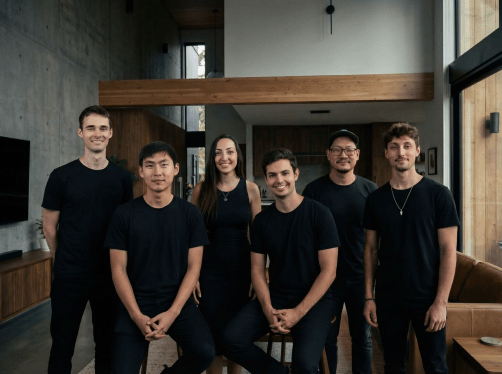
Drafted currently has six employees, four of whom came from Atmos. It has raised $1.65 million at a $35 million post-money valuation from investors including Bill Clerico, Stripe’s Patrick Collison, Jack Altman, Josh Buckley, and Warriors player Moses Moody. Bill Clerico, who had also been an angel investor in Atmos, led the round. He was so convinced by Donahue’s new vision that he reportedly insisted, “Nick, please take our money,” over a two-week period until Donahue accepted.
The company’s pitch is simple. The current market for custom homes offers two flawed choices: hire an expensive, slow architect, or buy a cheap, inflexible template plan online. Drafted aims to occupy a middle ground, offering customization at template prices, with complete plans costing between $1,000 and $2,000.
These economics are possible because Drafted built its own specialized AI model, trained on real house plans from homes that were actually built and permitted. This model incorporates practical constraints and is extremely cost-effective to operate, costing just two-tenths of a penny per floor plan generated, compared to 13 cents for general-purpose AI.
Currently, Drafted focuses on single-story homes, with plans to add multi-story and lot-specific features. A central question remains whether a substantial market exists for this service. Of the one million new homes built in America annually, only about 300,000 are custom-designed. Most people buy existing homes or choose from tract homes offered by large builders.
Investor Bill Clerico argues this is a chicken-and-egg problem. By making custom design cheap and fast enough, he believes many more people will opt for it. Donahue compares the potential to Uber, which didn’t just replace taxis but expanded the entire market for on-demand car service. Clerico suggests that in the future, there is no reason everyone shouldn’t have a totally custom-designed home.
However, the housing market has a long history of resisting disruption, and most Americans may remain price-conscious buyers who accept what is readily available. Another challenge is the question of a sustainable competitive advantage, or “moat.” When asked what prevents other AI companies from replicating Drafted’s model with similar datasets, Donahue points to brand loyalty. He cites his friend David Holz, founder of the AI image generator Midjourney, who noted that despite many competing models, Midjourney’s dedicated user base remains loyal.
Donahue believes that by moving quickly and satisfying customers, Drafted can become the definitive platform for house design. Early signs show promise. Since opening to the public, the platform has been attracting about 1,000 daily users. While not yet huge, these numbers indicate steady growth for such a new product.
Most importantly, Donahue now possesses invaluable insight from his first attempt. He brings a deep understanding of the problem and hard-won lessons from his previous venture, which could provide Drafted with a significant edge as it moves forward.