
True Ventures co-founder Jon Callaghan believes we will not be using smartphones the way we do now in five years, and possibly not at all in ten. For a venture capitalist whose firm has celebrated major successes over two decades, including consumer brands like Fitbit, Ring, and Peloton, along with enterprise software makers HashiCorp and Duo Security, this is more than speculation. It is a core thesis on which True Ventures is actively placing bets.
The firm has not achieved its success by following trends. Despite managing roughly six billion dollars across twelve core seed funds and four opportunity-style funds, the Bay Area firm has largely operated under the radar. While other venture capitalists build personal brands on social media to attract founders, True has quietly cultivated a tight network of repeat founders. This strategy appears effective. According to Callaghan, the firm has achieved sixty-three profitable exits and seven initial public offerings from a portfolio of about three hundred companies over its twenty-year history.
In the fourth quarter of 2025, three of True’s four recent exits involved repeat founders who returned to work with the firm after previous successes. Yet, it is Callaghan’s perspective on the future of human-computer interaction that stands out amidst the current focus on artificial intelligence and large funding rounds.
He states plainly that we will not be using iPhones in ten years, and likely in very different ways within five. His argument is simple: smartphones are a poor interface between humans and intelligence. He explains that the current process of taking out a phone to send a text or email is inefficient, prone to error, and disruptive to our normal lives.
So convinced is he of this shift that True has spent years exploring alternative interfaces, both software and hardware based. This same instinct led the firm to bet early on Fitbit before wearables were mainstream, to invest in Peloton after hundreds of other venture firms declined, and to back Ring when its founder was turned away by other investors.
Each investment seemed questionable at the time, says Callaghan. Each was a bet on a new, more natural way for humans to interact with technology.
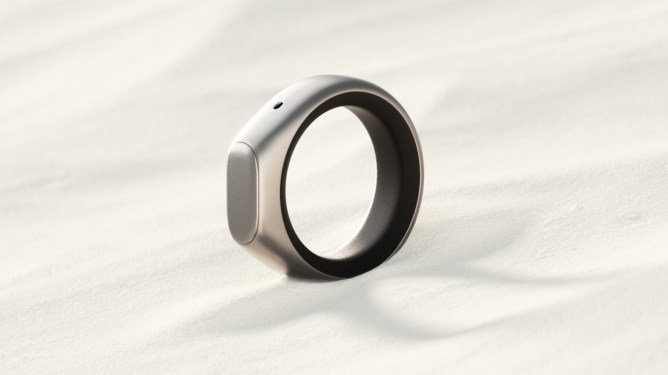
The latest expression of this thesis is Sandbar, a hardware device described as a “thought companion.” It is essentially a voice-activated ring worn on the index finger, designed solely to capture and organize thoughts through voice notes. It is not positioned as a competitor to broader devices like the Humane AI Pin or health trackers like Oura. Callaghan says it does one thing well, addressing a fundamental human behavioral need missing from current technology.
The device is meant to serve as a thought partner when an idea strikes, not to passively record audio. It connects to an app, uses artificial intelligence, and represents a different philosophy about interacting with intelligence.
True was drawn to Sandbar founders Mina Fahmi and Kirak Hong not just by the product, but by a shared vision. The founders previously worked on neural interfaces at CTRL-Labs, which was acquired by Meta. Callaghan emphasizes that the investment is about the behavior the ring enables, a behavior we may soon find indispensable.
This philosophy of betting on new behaviors, not just new gadgets, has helped True maintain capital discipline. Even as artificial intelligence startups raise hundreds of millions at high valuations, True continues its core practice of writing seed checks between three and six million dollars for fifteen to twenty percent ownership in startups it often sees first.
Callaghan states the firm will raise more money to fund successful ventures, but has no interest in raising billions unnecessarily. He applies a similarly measured view to the broader artificial intelligence boom. While he believes OpenAI could soon be worth a trillion dollars and acknowledges this as a powerful compute wave, he sees warning signs in the circular financing and massive projected spending on data centers and chips. He notes we are in a very capital-intensive part of the cycle, which is worrisome.
Nevertheless, he is optimistic about where real opportunities lie. Callaghan believes the greatest value creation is ahead, not in the infrastructure layer but in the application layer, where new interfaces will enable entirely new behaviors.
This returns to his core investing philosophy. He says early-stage investing done right should feel scary and lonely, and you should be called crazy. It should be blurry and ambiguous, but you should be with a team you truly believe in. Five or ten years later, you will know if you were on to something.
Given True’s track record of betting on hardware others overlooked, from fitness trackers and connected bikes to smart doorbells and now thought-capturing rings, it is worth noting when Callaghan says the phone’s days are numbered. Being early is the point. Market trends support his thesis: smartphone growth has slowed to barely two percent annually, while wearables like smartwatches, rings, and voice-enabled devices are expanding at double-digit rates.
Something is shifting in how we want to interact with technology, and True Ventures is placing its bets accordingly.