
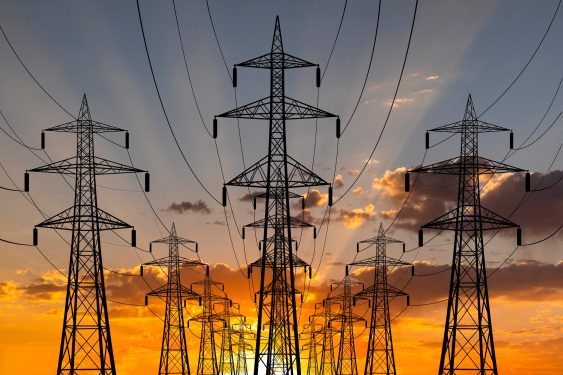
Venture capitalists have placed increasingly bigger bets on AI startups, investing over half a trillion dollars into the sector over the last five years. But these days, the smartest AI investment might be in energy, according to a report by Sightline Climate. Researchers found that up to 50% of announced data center projects face potential delays, with access to power being a primary culprit. Of the 190 gigawatts worth of data centers the company is tracking, only 5 gigawatts are under construction. About 6 gigawatts of data center projects came online last year, while a far larger percentage, about 36%, saw their timelines slip in 2025. These delays may eventually trickle down and affect large enterprises and other companies that rely on AI for their businesses.
This supply-demand squeeze presents an opportunity for investors. Big tech companies like Google and Meta have devoted large parts of their balance sheets to develop solar, wind, and nuclear projects. These companies are also supporting emerging technologies, such as Form Energy’s 100-hour battery, through direct investments and by working with utilities to accelerate adoption.
Dozens of startups are pursuing technologies that tackle the power problem. For instance, Amperesand, DG Matrix, and Heron Power are developing new power conversion technologies, while companies like Camus, GridBeyond, and Texture are building software that can manage the flow of electrons. Power remains one of the most significant constraints for data centers, a shortfall unlikely to change soon. AI is expected to drive data center power consumption up 175% by 2030, according to Goldman Sachs.
These grid shortages are unprecedented in modern times and have been driving up electricity prices nationwide. That has pushed many tech companies to explore alternative ways of powering their data centers. Amazon, Google, Oracle, and other large tech companies have been working to minimize their dependence on the grid. Several data centers are being planned using on-site power or a hybrid approach that blends on-site power with a grid connection. Less than a quarter of projects that have identified a power source will use on-site or hybrid methods; together they represent 44% of total capacity.
The shift has been driven partly by shortages of power generation equipment, namely gas turbines, and an antiquated grid. That has opened a path for alternative energy sources. Google’s latest deal to power a new data center in Minnesota shows one approach. The company will blend wind and solar with a massive 30 gigawatt-hour battery from Form Energy. Google also worked with the utility Xcel Energy to devise a new rate structure to encourage adopting new technologies.
Form Energy’s battery is not the only example. Grid-scale batteries are poised to take a big bite out of the power market. By the end of this year, the U.S. should have nearly 65 gigawatts of battery storage capacity, according to the U.S. Energy Information Administration.
Energy supplies are only part of the story. Once the power hits the grid or the data center, it needs to be managed, a task that mostly falls on the humble transformer. Most of today’s transformers use massive blocks of iron wrapped in copper wire, a technology that is about 140 years old. It is reliable, but it is becoming far too bulky as data center power demands ramp up. By the time server racks hit 1 megawatt in power density, the power equipment needed to run them will occupy twice as much space as the rack itself. This is why investors have been flocking to back solid-state transformer startups recently, which hope silicon-based power electronics can supplant the ancient iron-and-copper tech. They are more expensive than existing transformers, but they are also flexible enough to replace several pieces of equipment in a data center, which should make them cost competitive.
Altogether, the scale of investments in battery and transformer companies has been much smaller than some blockbuster rounds seen in the AI industry. That is not a bad thing, as those rounds are more tractable for investors. Plus, as the world electrifies everything from transportation to heavy industry, the need for power is only going to grow, giving investors a hedge against an AI bust. Maybe the best AI investment is not in AI at all.