
Tesla’s energy storage business saved a dismal earnings report from turning into a horrible one. Last year, the company’s profit fell 45% compared with the previous year, driven in large part by falling sales of its electric vehicles. While investors anticipated the decline in sales, Tesla still beat Wall Street earnings and revenue estimates thanks to its energy storage division.
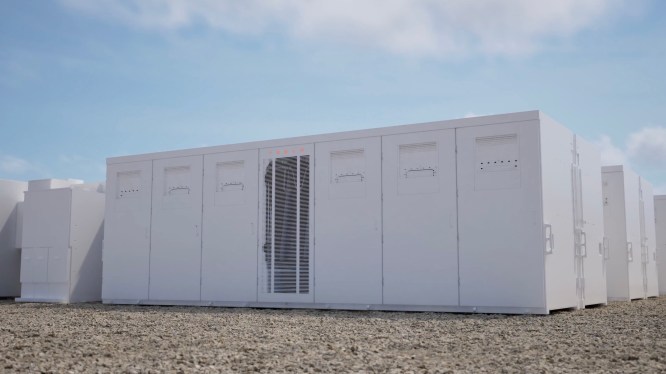
Tesla deployed a record 46.7 gigawatt-hours of energy storage products, a 48% increase from the year before, according to the company’s official filings. Big, stationary batteries like the Megapack and Powerwall, along with solar installations, now drive nearly a quarter of Tesla’s gross profit. In the last quarter alone, the Megapack contributed $1.1 billion of the storage business’s $3.8 billion in gross profit for the entire year. Storage and energy generation revenues were up 26.5% to $12.8 billion.
These batteries and solar panels are also very profitable, boasting a gross margin of 29.8%. That is nearly double what Tesla earns from selling cars and trucks.
Storage will likely play a larger role in the company’s near future. Large energy storage projects, like those installed for utilities or data centers, tend to be milestone-based, with revenue recognized when certain milestones are achieved. In its official filing, Tesla said it expects to recognize $4.96 billion this year in deferred revenue from projects already underway. That is more than double what the company recognized in deferred revenue from storage projects in the previous year.
Some hurdles lie ahead, however. Recent legislation phased out tax credits for residential energy storage systems like the Powerwall, though commercial tax credits for the Megapack and similar products will continue through the mid-2030s. Tariffs and provisions in the new law also threaten to increase battery cell prices. The company noted that while sales volumes were up, the average selling price of a Megapack was down, suggesting increased competition in the energy storage market.
Yet overall, Tesla remains optimistic about the storage business. The company stated in its earnings report that despite these challenges, as AI infrastructure drives rapid load growth, it sees opportunities for its energy storage products to stabilize the grid, shift energy when it is needed most, and provide additional power capacity.