
Welcome back to TechCrunch Mobility, your central hub for news and insights on the future of transportation.
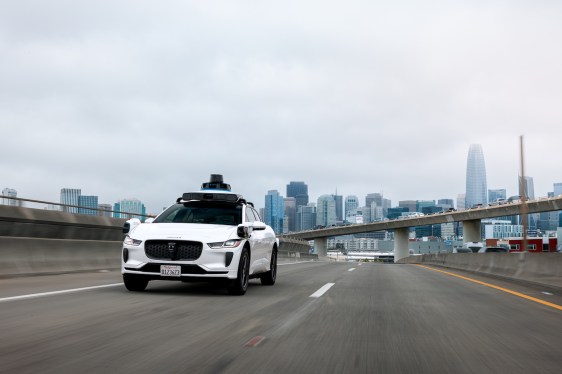
Earlier this month, Waymo’s chief safety officer, Mauricio Peña, testified before the Senate Commerce Committee as part of a hearing on autonomous vehicles. While much of the questioning was standard, Senator Ed Markey’s inquiries about overseas workers drew particular attention. Peña revealed that Waymo employs remote guidance workers based in the Philippines to assist with vehicle navigation or emergencies. This sparked criticism from Markey, who questioned how the company could rely on people without U.S. driver’s licenses to assist its vehicles on American roads.
Waymo responded in a blog post and a letter to Senator Markey’s office. The company clarified that it does not employ people who “remotely drive” its robotaxis; the self-driving systems remain in control. Remote assistance workers respond to specific information requests from the vehicle’s software. Waymo also employs Event Response Teams, which are exclusively based in the United States and handle more complex tasks like collision response, interfacing with law enforcement, and regulatory reporting.
The company shared that it has approximately 70 remote assistance agents on duty worldwide at any given time, based in Arizona, Michigan, and two cities in the Philippines. For context, Waymo operates a fleet of 3,000 vehicles, which drive over 4 million miles and provide more than 400,000 rides each week. This means a relatively small number of workers are monitoring a large number of robotaxis.
The debate over remote guidance operators continues as Waymo expands into new markets, with one notable exception. New York Governor Kathy Hochul withdrew a proposal that would have amended state vehicle laws to effectively legalize robotaxis outside of New York City. A spokesperson stated that legislative support for the proposal was not there.
In other news, a poll of Mobility newsletter readers revealed that more than 54% believe the upcoming Rivian R2 launch edition will have a starting price above $60,000, rather than at or below $50,000.
Separately, Lucid Motors is laying off 12% of its workforce, according to an internal memo. While an exact figure is not confirmed, it likely affects hundreds of employees. Affected workers were placed on a 60-day administrative leave, with official layoffs set for late April.
In deal news, several mobility and transportation startups secured funding. Amari AI raised $4.5 million to help custom brokers navigate trade policies. Kavak, a Mexican online used car dealer, raised $300 million in an equity round. LanzaJet, a next-generation fuels company, raised $47 million. Metafuels, a sustainable aviation fuel startup, raised $24 million in a Series A round.
Other notable industry updates include Ford’s new strategy to build a $30,000 electric truck using innovative methods like 3D-printed parts and Formula 1-inspired thinking. Redwood Materials is experiencing rapid growth in its new energy storage business focused on AI data centers. Rivian is launching an Apple Watch app for vehicle controls and released a broader software update. Tesla lost a bid to overturn a $243 million verdict in a fatal Autopilot crash case but avoided a 30-day license suspension in California after removing the term “Autopilot” from its marketing in the state.
Finally, in a recent test drive of a Lucid Air Touring sedan, the company’s hands-free driver-assistance system showed significant improvement over past experiences, with better lane centering and more robust driver monitoring.