
Welcome back to TechCrunch Mobility, your hub for all things future of transportation.
I was out for a few days last week, so we have some catching up to do. I won’t rehash too much, but expect some of the bigger news items to appear here. On a personal note, I will be in Austin next week for SXSW. I plan to attend the Rivian event, where the company is expected to reveal full details of its upcoming R2 line. I will also be moderating a panel called Innovation and Impact: Female Leaders Transforming Legacy Industries, alongside Rivian CFO Claire McDonough, Madison Reed CEO and founder Amy Errett, and Spotify chief public affairs officer Dustee Jenkins.
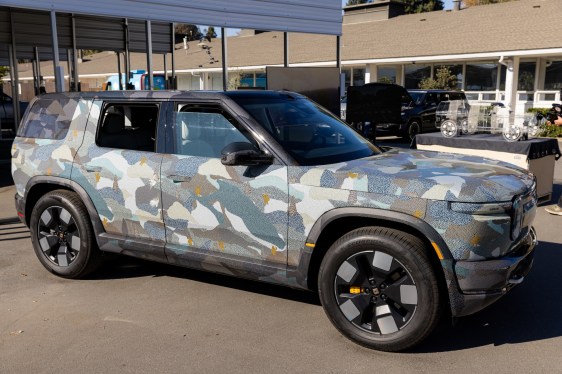
Speaking of Rivian, the company is planning one of the fastest launches of a new all-electric car in the U.S. with its forthcoming R2 SUV. The stakes could not be any higher. Senior reporter Sean O’Kane examined historical sales data and Rivian’s own projections for 2026. Rivian said it expects to sell between 20,000 and 25,000 R2s this year, with the first vehicles heading to customers in June once production begins. That gives the company just six months to reach that goal. Even if Rivian hits the low end of that target, its sales rate will outpace every other comparable electric vehicle at or under sixty thousand dollars aside from the Tesla Model Y.
My question is what tactical move is Rivian planning to use to reach that goal? It will not be enough to merely state there is pent-up demand. This is no small feat. I expect Rivian to try a variety of tactics to spread the word and turn interest into actual sales.
This is from last week, but it is worth commenting on. I am talking about Wayve and its one point two billion dollar raise. As I mentioned in my article, everyone seems to want a piece of this U.K. startup. Wayve is taking a different approach to automated driving. It does not want to be the operator. Instead it wants to license its software to automakers and robotaxi operators. Wayve has taken a self-learning approach, developing a software layer using an end-to-end neural network that does not require high-definition maps and only uses data to teach the vehicle how to drive. It is hardware agnostic, which could be appealing to its backers.
Other deals that got my attention include Denso making a takeover proposal for chip maker Rohm. Einride secured an oversubscribed one hundred thirteen million dollar private investment ahead of its expected public debut. Harbinger acquired autonomous-driving software company Phantom AI. Holyvolt acquired battery materials company Wildcat Discovery Technologies. Momenta has confidentially filed for an initial public offering in Hong Kong. Nominal raised eighty million dollars in a funding round. Toyota increased its offer price for supplier Toyota Industries. Zeno raised twenty-five million dollars to expand its battery-swap network and produce more of its motorcycles.
Notable reads and other tidbits include Chinese automaker BYD unveiling a new battery pack it says is capable of charging from ten to seventy percent in five minutes, though it requires a specific EV charger. An analysis suggests Hyundai, Toyota, and some Chinese automakers potentially face the most impact from geopolitical tensions in the Middle East. Volkswagen Group announced it has delivered four million all-electric vehicles since 2013. A video showed a Waymo robotaxi blocking an ambulance responding to a mass shooting in Austin, raising questions about the readiness of the technology.
One more thing: The National Highway Traffic Safety Administration has scheduled a forum on autonomous vehicle safety for Tuesday. A number of industry leaders are expected to attend.