
Welcome back to TechCrunch Mobility, your central hub for news and insights on the future of transportation.
In breaking news, the National Transportation Safety Board has opened an investigation into Waymo after its robotaxis were spotted illegally passing stopped school buses numerous times in at least two states.
Now onto our regular programming.
Tesla made a couple of moves this week, just before its quarterly earnings report, designed to show its progress in automated driving technology. The week started with Tesla offering passengers robotaxi rides in Austin without a human safety driver in the front seat. Tesla launched a limited service in Austin last year with a fleet of modified Tesla Model Y vehicles running a more advanced version of the company’s driving software. Human safety operators had been riding in the front passenger seat as a precaution since the rollout.
Not all of Tesla’s fleet in Austin will be fully driverless, and there is apparently a chase vehicle behind those that are. Still, it is notable and suggests Tesla is moving toward a broader ramp-up.
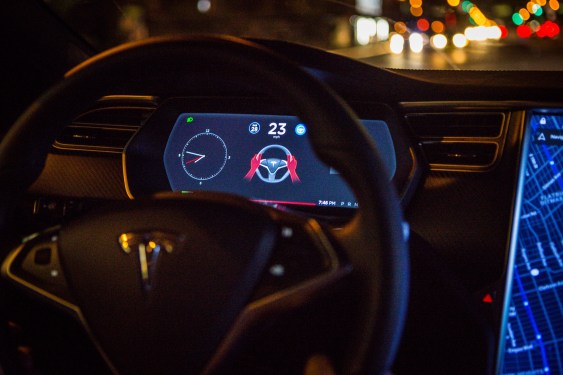
Meanwhile, Tesla has discontinued Autopilot, the advanced driver-assistance system initially introduced in 2014. Autopilot was instantly popular and controversial, in part because the name implied the system was more capable than it actually was. Tesla eventually made a basic Autopilot system standard in all of its vehicles, while launching and charging for a more robust system known now as Full Self-Driving (Supervised). The basic version, which is now dead, included traffic-aware cruise control and Autosteer.
Its decision to kill what was standard ADAS comes one week after Tesla said it would stop charging a one-time fee for the FSD software and move all customers to a monthly subscription. These decisions, taken together, offer a simple explanation: Tesla wants to recognize more revenue from FSD as it positions itself as an AI and robotics company.
But there is another possible reason. The company is facing a 30-day suspension of its manufacturing and dealer licenses in California after a judge ruled in December that Tesla engaged in deceptive marketing by overstating the capabilities of Autopilot and FSD. The ruling has been stayed for 60 days to allow Tesla to comply. Dropping the Autopilot name while cashing in on FSD is a rather bold move.
Zipline, the autonomous drone-delivery and logistics startup, has been around for more than a decade. Its progress sped up after it launched a new drone platform in 2025 called P2 that focuses on home delivery. Now, fueled with $600 million in new funding, its expansion ambitions have grown. The company, valued at $7.6 billion, is bringing its service to Houston and Phoenix and plans to expand to at least four more U.S. states in 2026.
Other deals that got my attention include ABZ Innovation, a Europe-based maker of heavy-duty agricultural and industrial drones, which raised $8.2 million. Ethernovia, a startup that makes Ethernet-based systems for autonomous vehicles, raised $90 million. Serve Robotics, the sidewalk delivery robot company, acquired Diligent Robotics in a deal that values the common stock at $29 million. Diligent builds robots named Moxi that are designed to assist in hospitals.
Terralayr, a German grid-scale battery storage company, raised €192 million. TrueCar founder Scott Painter reacquired the company in a $227 million deal through his firm Fair Holdings. TrueCar will no longer be publicly traded, and Painter has returned as CEO.
In other notable reads, Austin Russell, the founder and former CEO of bankrupt lidar company Luminar, agreed to accept an electronic subpoena for information pertaining to the company’s bankruptcy proceeding.
Chinese automaker Geely Holding Group released its five-year blueprint, which includes a goal for its ride-hailing unit to operate a fleet of 100,000 robotaxis in major Chinese cities by 2030, with future plans to expand beyond China.
General Motors is moving production of two gas-powered vehicles away from China and Mexico to a U.S. factory in Kansas. This change will also mean the end of production for the Chevrolet Bolt EV at that plant.
Tesla aims to restart work on Dojo3, the company’s previously abandoned third-generation AI chip. CEO Elon Musk says it will be dedicated to “space-based AI compute” instead of training self-driving models.
Waymo has opened its robotaxi service in Miami to the public, accepting riders on a rolling basis from its waitlist.
Finally, Alex Roy recently traveled from Los Angeles to New York in a Tesla Model S, with the vehicle’s Full Self-Driving Supervised software handling all of the driving. According to Roy, the software drove 100% of the 3,081-mile journey, which included exiting the highway and parking at EV chargers. The trip took 58 hours and 22 minutes.