
Welcome back to TechCrunch Mobility, your central hub for news and insights on the future of transportation.
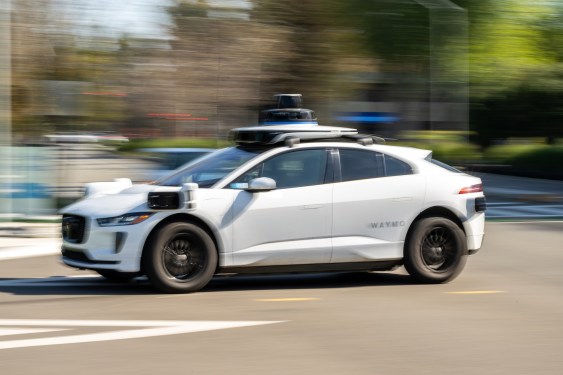
Waymo’s acceleration over the past 18 months is undeniable. The Alphabet-owned self-driving company now operates commercial robotaxi services in six markets, including the San Francisco Bay Area, Phoenix, Los Angeles, Austin, Atlanta, and Miami. It plans to grow its fleet of driverless taxicabs this year to more than a dozen new cities internationally, including London and Tokyo. And now it has 16 billion dollars to fuel that expansion.
Is it enough? Talking to a few industry watchers, the answer kept landing in the squishy “sort of” and “it depends” territory. First, the bull case. Alphabet is clearly committed to ensuring Waymo’s success; the parent company is, and continues to be, the primary investor. This means Waymo isn’t exposed like other AV startups that suddenly lost funding after their backers got skittish or pivoted.
Its ridership and autonomous miles driven stats are also exploding and will likely continue on that trajectory unless derailed by regulators. Waymo provides 400,000 rides every week across six major U.S. metropolitan areas, and in 2025 alone, it more than tripled its annual volume to 15 million rides.
This doesn’t guarantee success, though, especially if the gauge is set to profitability. Waymo still must solve several problems, including cost and increasing attention from regulators. If Waymo wants to simply be the licensor of its AV tech, it will have to move away from being the operator, which means giving up some control. That’s hard with a nascent technology under scrutiny.
And while some will fight me on this, it also lacks the in-house manufacturing that Tesla has. Yes, Waymo has automotive partners. But it doesn’t come with the same financial leverage or ability to drive down costs with scale.
The investors behind the now-defunct EV startup Canoo were always mysterious. In fact, they were only revealed as part of a lawsuit. Six years ago, I received a tip to look into one of them in particular: David Stern. He had connections to Prince Andrew but was otherwise a ghost.
He was on my mind as the Department of Justice started releasing its files on Jeffrey Epstein. My curiosity as to whether he would turn up in the documents was quickly overwhelmed by the fact that he was, in fact, a close business partner of the convicted sex offender. He brought Epstein investment opportunities from around the world, and in particular, pitched him on investing in Faraday Future, Lucid Motors, and Canoo during the go-go days of mobility funding.
Autonomous vehicle technology is about more than just robotaxis. It is a difficult and costly business that only a handful of well-capitalized companies like Tesla, Waymo, and Zoox are pursuing. Many startup founders are applying the AV systems they’ve developed to other use cases, including off-road defense, trucking, forklifts, mining, and construction. Investors, anxious about missing out on the AV party, are jumping into these sectors.
Bedrock Robotics is the latest example of investor interest. The Silicon Valley autonomous vehicle technology startup, founded by veterans of Waymo and Segment, is developing a self-driving system that can be retrofitted onto construction equipment. And it just raised 270 million dollars in Series B funding co-led by CapitalG and the Valor Atreides AI Fund.
Bedrock raised more than 350 million dollars in a short time. And while that might not seem like a lot compared to the size of some seed rounds in the AI labs sector, it shows money is flowing into physical AI startups. I expect more deal flow. Importantly, I expect the startups focused on practical applications of automated driving systems to attract talent if they can afford them.
Other deals that got my attention this week include German electric motor maker Additive Drives raising 25 million euros. Autonomous underwater vehicles startup Apeiron Labs closed a 9.5 million dollar Series A round. African mobility fintech startup GoCab raised a 45 million dollar financing round. Commercial EV fleet company Mitra EV raised 27 million dollars. Seattle-based developer of self-driving systems for military operations, Overland AI, raised 100 million dollars. The used EV marketplace Plug raised 20 million dollars in a Series A. European startup R3 Robotics, which automates the disassembly of EV systems, raised 20 million euros. Aviation automation startup Skyryse has raised more than 300 million dollars in a Series C investment.
China has banned concealed electronically actuated door handles popularized by Tesla. The ruling says all new cars sold in the country must have mechanical releases on their door handles by January 1, 2027. There is chatter that Europe could soon follow.
Uber continues to make moves designed to make it competitive in the autonomous vehicle sector. The company has promoted Balaji Krishnamurthy, its VP of strategic finance and investor relations, to be its CFO. This may not seem connected to AVs, but it is. Krishnamurthy actively promotes the company’s autonomous ride-hailing partnerships and has a board seat at AV company Waabi.
Meanwhile, a high-profile lawsuit against Uber has delivered a mixed verdict for the ride-hailing company, which was sued after a woman alleged she was raped by her Uber driver. A jury determined Uber was liable as an apparent agent of the driver and awarded 8.5 million dollars to the plaintiff. The jury rejected claims that Uber was liable for negligence or design defects and declined to award punitive damages. An Uber spokesperson said the verdict affirms that Uber acted responsibly and has invested meaningfully in rider safety. Uber plans to appeal the decision.
Last week in our newsletter, we did a poll asking what the name or ticker of Elon Musk’s combined supercompany should be. Thanks to those who emailed their suggestions. As for the poll, the majority picked plain old X. About 50 percent voted for X, while 20.7 percent picked ELON, 17.2 percent selected SpaceAI, and 12.1 percent chose K2. My pick? I think it will ultimately be X, and the company will include more than just SpaceX and xAI.