
Ethereal Exploration Guild, an Indian spacetech startup better known as EtherealX, is close to securing about $21 million in a new funding round. The round is co-led by TDK Ventures, with participation from Accel and Vietnam-based venture capital firm BIG Capital.
Initially planned as a $15 million Series A, the round has drawn strong investor demand and is now expected to reach about $20.5 million. This funding comes more than a year after the startup raised a $5 million seed round in August 2024.
The funding talks follow EtherealX securing $130 million worth of contracts from six customers, underscoring early commercial demand for its launch services. The startup is developing a fully reusable medium-lift launch vehicle.
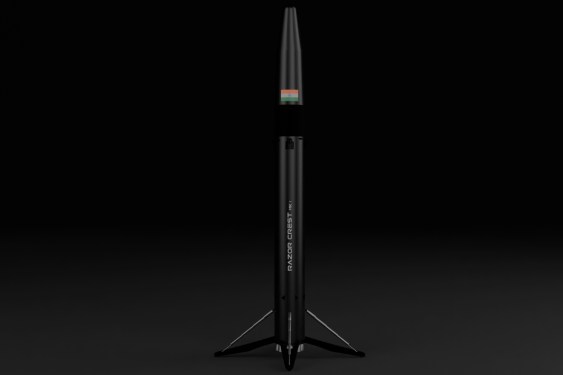
Founded in 2022 by Manu J. Nair alongside former Indian Space Research Organisation scientist Shubhayu Sardar, who serves as chief operating officer, and aerospace engineer Prashant Sharma, the chief technology officer, EtherealX is aiming to take on SpaceX. Their rocket, called Razor Crest Mk-1, is designed to be fully reusable. It is expected to place up to eight tonnes into low Earth orbit and will also be capable of delivering payloads to geostationary transfer and trans-lunar injection orbits.
The Bengaluru-based startup says its launch system will offer cost efficiencies to customers while helping to address a global shortage of launch capacity. A first launch is targeted for early 2027.
In a previous interview, Nair said EtherealX’s rocket could offer launch prices ranging from about $350 to $2,000 per kilogram. By comparison, SpaceX’s Falcon 9 typically charges between $1,600 and $2,000 per kilogram.
India has emerged as one of the few countries globally with a geographic and regulatory advantage for space launches, offering access to multiple orbital inclinations from a single launch site. Its growing spacetech ecosystem is also attracting global investors.
EtherealX has secured 16 acres of land in the southern Indian state of Tamil Nadu, which it plans to make operational early next year. The startup has also been developing key components, including a liquid oxygen turbopump assembly for its upper-stage engine, known as Pegasus 2.0.
India is aiming to dramatically expand its footprint in the global commercial space industry. The country is targeting an 8% to 10% market share over the next decade, up from less than 2% today, with much of that growth expected to be driven by private startups. Officials are working toward a $40 billion to $45 billion space economy within the next eight to 10 years.
The founder and investors declined to comment or did not respond to requests for comment.