
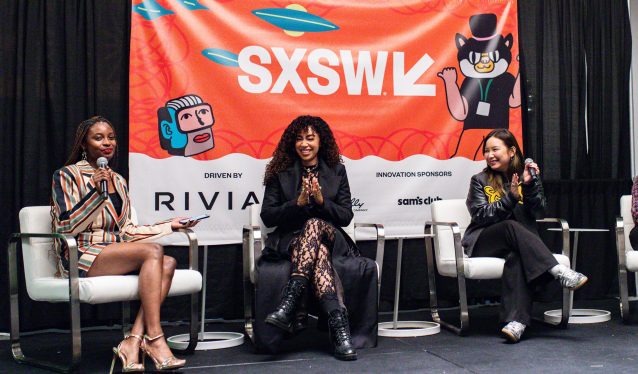
The air felt different at this year’s SXSW, the annual March festival where tech meets pop culture in Austin. I was reminded of the 2019 event when people packed downtown and long lines formed outside local venues. Attendees said it was like that again this year, though a friend who lives in the area and has attended many times noted that some things have changed. For instance, the festival is now two days shorter than it used to be.
It was also more decentralized, mainly due to the demolition of the Austin Convention Center, which scattered events and panels throughout downtown venues. That made the whole conference feel less overwhelming but also less connected. The event is still recovering from the pandemic, during which it laid off staff and went two years without much income. It has switched hands since then and, as of this year, has adopted a new strategy.
Greg Rosenbaum, the SVP of programming at SXSW, said this year, the conference’s 40th anniversary, was its most ambitious reinvention yet. He cited changes like the new Clubhouses, for recharging, networking, and special programming, that attracted 5,000 people daily. He noted how attendees were experiencing more of Austin and the downtown community.
For the tech founders I spoke with, the conference remains immensely valuable, and everyone had the same advice: at conferences like these, you get what you give. There were people to meet and panels to speak on. The Grammy-nominated Lola Young performed, Vox threw a hot party, the new Boots Riley film premiered, and Serena Williams and Steven Spielberg gave keynotes. I also moderated a panel about AI and taboo topics like relationships and money.
Ashley Tryner-Dolce, an investor and founder, said the conference was still an incredible gathering of ideas. Like many festivals, though, she found the most meaningful moments happened at the side events, like the INC’s Founder House party, where she connected with other founders and CEOs. “It’s less about the main stage and more about who you’re sitting across from,” she said.
James Norman, a managing partner at Black Ops VC, didn’t even have a proper badge to the festival. He threw an event to connect founders with opportunities and attended some film screenings and dinners. “If you’re just showing up without the right connections or proximity to the rooms and conversations that matter, you’re going to struggle to unlock the real value of the event,” he said.
That is exactly what Jonathan Sperber, a founder who participated in the SXSW pitch competition, also expressed. “The value tends to depend on how well you prepare for it,” Sperber said, adding that his team made sure to have meetings lined up and a clear strategy going in. He called it an effective setting for connecting with large enterprises and other key stakeholders.
The talk of SXSW being dead has circled the industry for years, but that never seems to be the case. For every batch of tiring founders, a crop of fresh eyes and ambition emerges, ready to take advantage of what the festival offers. For example, this was Simon Davis’s first SXSW. He said his overall impression was that it was a media conference with a tech angle, not the other way around. He praised the diversity of the event compared to other tech events.
“At SXSW, you get a much wider range of people, backgrounds, and experience levels,” he continued. “The live music programming reinforces that. It’s a different energy entirely. Not somewhere you’d necessarily go to do deals as a tech company, but a great place to share and learn.”
This year, SXSW introduced a new badging system, meaning each person had a different experience depending on what track badge they bought: film, music, or tech. I felt surrounded by conversations about AI and technology, and overheard other tech people talking about how the festival once had a stronger music focus, though there did seem to be more tech-focused panels this year than music showcases or film opportunities.
The conference also eliminated the secondary access that let people with, say, music badges get into film events. Instead, people had to buy the all-in-one premium badge for around $2,000. It also introduced a reservation system to help with lines, where badge holders had to book time for whatever they wanted to do. That was true even for those with a platinum badge, like Sperber.
As a result, he said the festival didn’t feel like a place where anyone could just show up, and noted that some events booked up so quickly they were difficult to get into. The decentralized setup also made it harder to get around than he would have liked. “I liked the openness and the ability to meet folks from all life experiences, got to really understand the city, and some of the interactive exhibits were very interesting,” he said.
Rosenbaum said the team made the decision to get rid of secondary access after hearing feedback that attendees wanted more streamlined access across the badges, as well as more benefits for Platinum badges. They also lowered the price of the platinum badge to make the all-in-one option more affordable. Reservations will return next year, he said, citing positive feedback aside from a few technical errors and capacity confusion. They will certainly adjust and refine them as needed.
Norman described it as more of an unconference now, at least from his perspective. He said the event was more flexible, allowing people to move around, meet people, and then go to other places.
Rodney Williams, the co-founder of the fintech SoLo Funds, has also noticed a change, but again, it’s not necessarily a bad one. He’s been going to SXSW for more than a decade and has hosted events and spoken on panels. Usually, he goes for the entire festival, but this year, he decided to go only for a few days, throwing his own events and avoiding lines.
He said that for tech founders, SXSW has moved from an intimate, scrappy discovery zone to a high-cost, high-competition space, focused on investor interaction and experiential marketing. This means companies with big budgets can put on the big activations and get more eyeballs. “If you are attending for the first time or don’t have access to the right events or connections, the event can definitely prove to be tricky,” Williams said.
There were reports of fewer spectacles overall and an absence of big tech companies advertising. Williams elucidated that even with the lack of big tech companies, advertising is still a big-bucks game. “Companies with massive marketing budgets are usually the only ones participating, launching products, or throwing pricey events,” he said. “It wasn’t always like this, and that shift has taken away opportunities from the emerging tech companies that used to participate.”
Williams added, “Now, standing out requires more than just a great product, demanding significant marketing investment that only companies with huge budgets can do.” That didn’t stop him from throwing a party this year. Norman did the same.
In fact, the organizers expected around 300,000 people to show up this year, with final numbers available in April, revealing that the conference has yet to lose its steam or its magic. “I always enjoy it and make the most out of it,” Williams said.