
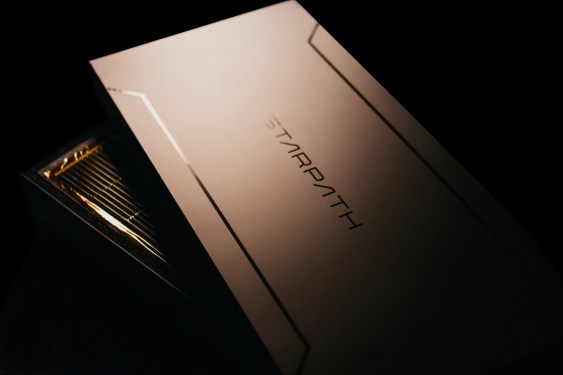
Ask Starpath CEO Saurav Shroff his thoughts on America’s space priorities and he will say the country is one order of magnitude high on cost and one order of magnitude low on ambition. Starpath’s proposed solution, at least for part of the problem, is ultra-low cost space power generated by solar panels.
The company’s new space-rated solar panel business began sales in the United States on September 25 with a remarkable claim. Starpath says its solar panels, named Starlight, are priced approximately ten times cheaper than the typical industry pricing of seven to two hundred and fifty dollars per watt. This represents a roughly ninety percent cost reduction compared to the current standard.
At launch, there will be two product tiers. The first is an engineering model priced at nine dollars and eighty-one cents per watt, with shipping starting the second week of October. This model undergoes a streamlined testing process but is not rated for flight, making it suitable for prototyping, laboratory use, and building a satellite before its launch. The second tier is a flight model, designed for actual use in space, priced at eleven dollars and twenty cents per watt. It is scheduled to begin shipping in the fourth quarter of this year.
The startup attributes this steep cost reduction partly to building its own automated production line. While Starpath is keeping most details of this process private, it is designed to dramatically increase output. The company claims that by next year, its production line could manufacture more space-rated solar power capacity than the rest of the world’s supply combined, with enough capacity to service every satellite built on Earth.
Saurav Shroff stated that it is a win for humanity if their solar panels are available commercially for the entire space industry at a price that is ninety percent cheaper than current options. The panels will not be made to order but will be kept in stock. Shipping times are expected to be as short as three weeks initially, reducing to just three days starting in December. This is a dramatic improvement over the current industry lead times of five to fourteen months.
This new product line emerged from Starpath’s broader ambition to terraform the solar system, beginning with the moon and Mars. When the team calculated the cost of power for a serious lunar base, they found current solar solutions were not economically viable. Scaling today’s satellite-supply-chain economics would mean spending more than the entire world’s GDP on solar power. Shroff noted that while the economics somewhat work for the satellite industry, they do not work for building a city on Mars. This realization prompted Starpath to design its own product and manufacturing process.
Shroff explained that these low prices mean that for a multi-million-dollar satellite, the power system would only cost around one hundred thousand dollars. Starpath’s roadmap is aggressive, with Shroff stating the production system is designed for rapid scaling. He said if demand required it, the company could scale to upwards of forty gigawatts within a year.
Without specifying which companies, Shroff mentioned there is interest in building applications for low Earth orbit that require significant amounts of power. He argued that selling panels does not distract from Starpath’s core mission but instead monetizes a capability the company had to develop for itself. Starpath will be the consumer of approximately ninety-eight percent of its own output, using the vast majority of its panels for its off-world infrastructure projects.
Shroff concluded by saying that people should dream bigger. He believes everyone, particularly NASA, should take a careful look at their goals and ask themselves if they are dreaming big enough.