
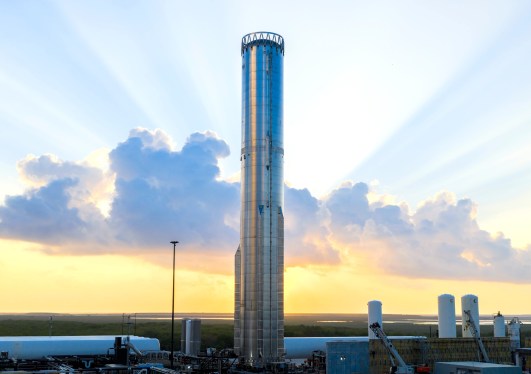
SpaceX rolled out an upgraded version of its Starship rocket booster in South Texas on Thursday to begin testing. Just a few hours later, something inside the booster exploded.
Live streamers who watch the company’s Starbase complex closely captured the explosion in the pre-dawn hours on Friday, around 4:00 a.m. local time. Other creators in the area have since shared photos that offer a closer look at the resulting damage.
Unlike the more fireball-type explosions SpaceX has experienced during rocket development in the past, this event appears to have blown out an entire side of the booster’s lower section while leaving the rest of the structure standing. The incident happened very early in the testing process; the booster did not even have rocket engines installed yet.
SpaceX stated that it was performing gas system pressure testing when the explosion occurred. The company confirmed that no one was hurt, as the area had been cleared for the test. The teams now need time to investigate before they can be confident of the cause.
This particular booster was the first major component of what SpaceX calls Starship version three, or V3. The V3 design is intended to be larger, more powerful, and more reliable. A crucial feature is its capability to dock with other Starships in orbit around Earth, which is a key part of SpaceX’s plan for missions to the Moon and Mars.
It is not immediately clear what kind of impact this explosion will have on SpaceX’s next steps. However, any significant delay to its testing program could put the company’s overall plans at risk.
The company has been aiming for a very busy 2026 for the Starship program. Key goals include demonstrating the ability to transfer fuel from a tanker version of the rocket to another Starship while in orbit. SpaceX must prove this capability to NASA before it can proceed with crewed missions to the Moon, which it is reportedly targeting for 2028.
Acting NASA administrator Sean Duffy has already criticized SpaceX for not moving quickly enough on its Moon mission progress. He has said he may want to give Jeff Bezos’ Blue Origin a chance to take the contract instead.
Blue Origin is picking up the pace on developing its own mega-rocket. Just last week, the company launched its New Glenn rocket for the second time and delivered its first commercial payload for NASA. The company also successfully landed its first New Glenn rocket booster. Furthermore, Blue Origin recently revealed an even larger design for New Glenn that will more directly compete with Starship.
This story has been updated with new information from SpaceX.