
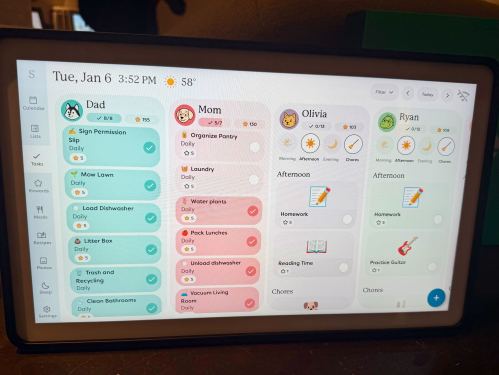
Skylight began as a digital picture frame, but today the company focuses on helping families stay organized with shared calendars, lists, meal planning tools, and more. At CES 2026, Skylight debuted its latest product: the Skylight Calendar 2. This new model offers a sleeker design than the original 15-inch calendar, yet it is smaller than the 27-inch wall-mounted Calendar Max. Like its larger counterpart, this digital calendar and family organizer lets you swap out the frame for different colors to match your home’s decor.
The biggest selling point is not the digital screen itself, but the underlying software and AI capabilities. The primary calendar feature is a mashup of all your family’s calendars from services like Google Calendar, iCal, Microsoft, or even your kids’ sports apps like TeamSnap. The calendar is color-coded so you can see everyone’s schedules at a glance. It can even import dates from emails or paper flyers sent home in a backpack. For paper items, an AI feature lets you snap a photo, and the calendar updates with the new events automatically.
The company also addresses other family pain points, such as managing grocery lists, setting reminders for appointments, meal planning, and recipe discovery. Of course, it can still display your family photos when not in use.
The app is designed to be easy to read with simple navigation, pops of color, and imagery that makes it usable even for young children. For instance, kids can check off their chores by looking for a picture before they can read. Parents appreciate the meal planning features, which can range from simply noting that Tuesday is taco night to finding a recipe and preparing a shopping list. Skylight helps here by automatically creating a shopping list of ingredients or even adding it to your Instacart app.
Another clever AI feature allows you to snap a photo of what’s in your fridge and get a recipe recommendation based on what you have on hand.
The need for such a system is clearly resonating with customers. Skylight, a bootstrapped and profitable company from day one, now has over 1.3 million families using its digital calendars, with more likely to come as the new design ships.