
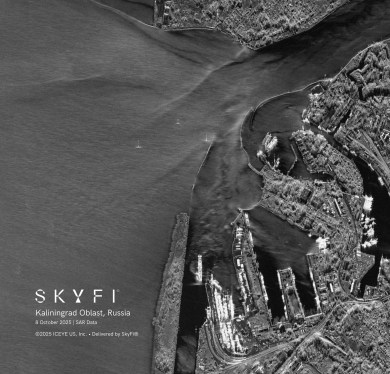
Thousands of satellites orbit the Earth, capturing all types of images in near real time. While accessing these images was once a cumbersome process, the Austin-based startup SkyFi has built a platform that simplifies it. The platform acts as a central source for imagery from more than fifty geospatial partners, serving clients in finance, defense, infrastructure, and insurance.
SkyFi’s popularity grew as it began offering more analytics and insights through its website and mobile app. A key feature is the ability to task satellites to capture images of a specific location at a chosen time. According to CEO Luke Fischer, the company’s real goal is to provide answers for both government and commercial customers. He notes that imagery itself is becoming a commodity, so the focus is on the speed of delivering actionable insights, not just the images.
This emphasis on insights is a major reason SkyFi recently closed a $12.7 million Series A funding round. The round was co-led by the climate-focused fund Buoyant Ventures and IronGate Capital Advisors, which invests in dual-use companies. Other investors included DNV Ventures, Beyond Earth Ventures, and TFX Capital.
Fischer and co-founder Bill Perkins initially sought to raise about $8 million. However, 2025 was a record year for defense-related investments, and investor demand exceeded expectations. The target was increased to $10 million, then $12 million, before reaching the final $12.7 million figure as strategic investors joined.
Fischer stated that SkyFi previously faced challenges convincing satellite imagery providers to share their data. Now, onboarding new providers is standard. The company has assembled a large virtual constellation of assets, granting access to a vast supply of data from various sensor types. SkyFi leverages this data, along with years of customer requests, to build analytical offerings that meet market needs.
Fischer compares this feedback loop to his experience at Uber’s Elevate division. Just as Uber used data on movement to layer new services, SkyFi uses data on what people are looking at and asking for to guide its product development. As a software-first company, SkyFi avoids the capital expenses associated with hardware.
While some customers, like hedge funds, prefer to conduct their own analytics, Fischer says most are increasingly interested in SkyFi’s insights. The new funding will be used to expand these capabilities. Fischer takes pride in creating a product that is both powerful and accessible, noting that even his teenage daughters task satellites for their school homework using their iPhones.