
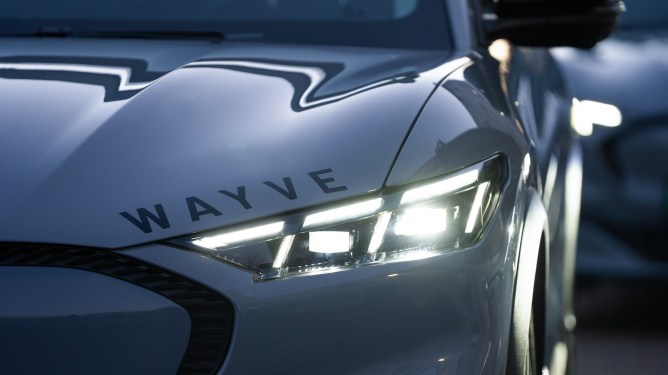
Wayve’s self-driving technology has attracted a diverse set of investors in the company’s latest funding round, which raised $1.2 billion. The investors include three automakers, top venture and institutional firms, and returning backers Microsoft, Nvidia, and Uber. The U.K. startup is now valued at $8.6 billion. This funding illustrates the eagerness among Big Tech, legacy automotive companies, and the investor community to profit from the burgeoning automated driving industry.
Founder and CEO Alex Kendall describes Wayve as an alternative, or “contrarian,” option in both its technology and business model. He stated that the company took a contrarian view on technology by being the first to build an end-to-end deep learning system for autonomous driving. Now, as the industry moves into commercialization, Wayve is also taking a contrarian approach to its business model.
Launched in 2017, Wayve uses a self-learning approach for its software. The company developed a software layer using an end-to-end neural network that does not require high-definition maps and uses data to teach the vehicle how to drive. This data-driven approach is used for two products: an “eyes on” assisted-driving system and an “eyes off” fully automated-driving system that could be applied to robotaxis or consumer vehicles in certain environments.
The company pitches the agnostic nature of its technology to customers, as it is not reliant on specific sensors or maps. The software captures data from whatever sensors are on the vehicle to direct driving decisions and can run on whatever chip its manufacturing partners already have in their vehicles.
Nvidia, a backer since 2018, has had a close development relationship with Wayve. The startup’s Gen 3 platform, unveiled last fall, uses Nvidia’s in-vehicle compute autonomous vehicle development kit. This platform will allow Wayve to offer eyes-off advanced driving-assistance systems and Level 4 driverless features for city streets and highways.
While the technology is somewhat similar to Tesla’s approach, there are key differences in their business models. Wayve does not want to operate its driving systems or build its own vehicles. Instead, it sells its “embodied AI” to automakers and other tech companies like Uber. Kendall argues this model offers the largest addressable market, made possible because Wayve built a generalizing AI that is not specific to a particular sensor or computer architecture.
Nissan and Uber are both Wayve customers. Nissan plans to use the startup’s software to enhance the advanced driver-assistance system in its cars starting in 2027. Uber plans to launch commercial trials in vehicles equipped with Wayve’s software this year.
Uber’s partnership appears set to expand significantly. Uber CEO Dara Khosrowshahi indicated plans to deploy the technology together in more than 10 markets worldwide, working across multiple manufacturers and geographies.
The funding round was led by Eclipse, Balderton, and SoftBank Vision Fund 2. New investors include the Ontario Teachers’ Pension Plan, Baillie Gifford, British Business Bank, Icehouse Ventures, and Schroders Capital. Global automakers Mercedes-Benz, Nissan, and Stellantis, all of which plan to use Wayve’s technology, also participated. Nvidia, which participated in a previous funding round, also joined this round, though the exact amount of its investment was not disclosed.