
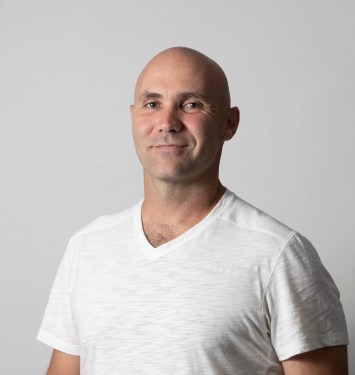
When Kevin Hartz’s security system failed to alert him as an intruder rang his doorbell and tried to enter his San Francisco home late one night, the serial entrepreneur decided existing solutions weren’t good enough. His co-founder Jack Abraham had experienced similar frustrations at his Miami Beach residence. In 2024, they launched Sauron, named after the sinister, all-seeing eye from “The Lord of the Rings,” to build what they envisioned as a military-grade home security system for tech elites.
The concept resonated in Bay Area circles, where crime had become a constant topic during and after the pandemic, despite San Francisco Police Department statistics showing property crime and homicide rates declining last year. The startup raised $18 million from executives behind Flock Safety and Palantir, defense tech investors including 8VC, Abraham’s startup lab Atomic, and Hartz’s investment firm A*. It came out of stealth exactly a year ago, promising to launch in the first quarter of 2025 with a system combining AI-driven intelligence, advanced sensors like LiDAR and thermal imaging, and 24/7 human monitoring by former military and law enforcement personnel.
But a year later, Sauron is still very much in development mode, a reality that its new CEO, Maxime “Max” Bouvat-Merlin, acknowledged candidly in a recent interview. After nearly nine years at Sonos, including a stint as chief product officer, Bouvat-Merlin took the helm of Sauron just last month. He is spending his first days on the job finalizing fundamental questions: which sensors to use, how exactly the deterrence system will work, and when the company can realistically get products into customers’ homes.
The answer to that last question is later in 2026 at the earliest, a significant delay from the original timeline. Bouvat-Merlin stated that the company is in the development phase and will take a phased approach to getting its solution to market. All the different components, including the concierge service, the AI software running on servers, and the smart cameras, are building blocks coming together in a plan put in place very recently.
Bouvat-Merlin sees striking parallels between Sauron and Sonos, as both target wealthy customers first, rely on word-of-mouth growth, and combine complex hardware with sophisticated software. He noted that the strategic questions faced by both companies are very similar, such as whether to start with super-premium customers or mass premium, choose professional installation or DIY, and build everything in-house or partner with an ecosystem.
Bouvat-Merlin says he was drawn to Sauron by both the mission and an opportunity to solve a real customer problem. Securing people’s homes is important, but he also likes the deterrence aspect of changing people’s minds before they make a bad decision. His research showed that market leaders in premium home security have small market shares and negative Net Promoter Scores, with many customers unhappy due to false positives that erode law enforcement response.
The company is targeting customers where safety and security is a major concern, like Hartz. The plan is to start with this premium segment, establish a reputation for supporting demanding clients, and then expand to what Bouvat-Merlin calls mass premium.
So what exactly is Sauron building? The answer is still evolving. The offering starts with camera pods containing multiple sensors, potentially including LiDAR, radar, and thermal imaging. These pods connect to servers running machine learning software for computer vision, all linked to a 24/7 concierge service staffed by former military and law enforcement personnel who understand patterns and can help train the system.
The deterrence system remains somewhat vague, with options being considered like loudspeakers and flashing lights. Bouvat-Merlin emphasized that deterrence should begin before someone enters a property, detecting surveillance, noticing cars circling neighborhoods, and identifying threats at each stage. Regarding drones mentioned in initial plans, Bouvat-Merlin declined to go into detail, calling them roadmap conversations and emphasizing a focus on growing through partnerships.
With fewer than 40 employees, Sauron plans to hire just 10 to 12 more in 2026. The company will begin working with early adopters later in 2026, with a Series A fundraise planned for mid-year. Bouvat-Merlin stated that raising a Series A is about accelerating growth to launch the first end-to-end product, drive customer adoption, and accelerate the roadmap. The company has already attracted a significant list of prospective clients and expects initial growth through word of mouth.
Bouvat-Merlin is cautious about growth, wanting to ensure the company grows sustainably and keeps the experience and service premium over time while managing growing pains and driving profitability.
Facial recognition and privacy concerns loom large for a surveillance-heavy product. Bouvat-Merlin outlined a potential trust-based system where homeowners grant access to specific people, creating a trusted group. License plate detection is also being considered for identifying suspicious vehicles. He expressed confidence in the opportunity because Sauron is approaching the market as a tech startup bringing new technology to security, rather than a traditional security company adding tech.
Sauron is appearing as concerns rise about crime among the wealthy, with recent high-profile incidents like an armed robbery in San Francisco where millions in cryptocurrency were stolen. Bouvat-Merlin noted that wealthy individuals attract criminals and that the company sees anxiety from prospective clients eager to get their homes secured.
Much remains uncertain about Sauron’s path. The company must finalize everything from sensor configurations to manufacturing locations, potentially starting in the U.S. for proximity and control. It must also determine how to serve customers in different settings, from estates to dense urban residences, while maintaining premium service quality.
For now, Bouvat-Merlin says he is focused on listening to his team, building credibility, and finalizing the strategy. The company expects to share more details about its products later next year.