
Fusion energy startup Helion is reportedly in early talks to sell power to OpenAI. Both companies share a notable backer in Sam Altman. The potential deal could guarantee OpenAI access to a significant portion of Helion’s projected output, specifically 12.5% of its production. This would translate to five gigawatts of power by 2030 and fifty gigawatts by 2035.
These figures, if accurate, indicate Helion has ambitious plans for rapidly scaling its fusion power plants. Each Helion reactor is designed to generate 50 megawatts of electricity. To meet its reported commitments, the company would need to build and install 800 reactors by 2030 and an additional 7,200 by 2035. Helion is racing to construct its first commercial-scale reactor on this timeline. Success would position the startup years ahead of many competitors, who are generally targeting the early 2030s for commercial operations.
Helion’s approach to fusion power differs from most other startups. While many aim to use fusion heat to drive traditional steam turbines, Helion is developing a reactor design that uses magnets to directly convert fusion energy into electricity. Inside its hourglass-shaped reactor, fusion fuel is turned into plasma at both ends. Magnetic fields propel these plasmas toward each other to collide in the middle, where another set of magnets compresses the merged plasma until fusion occurs. The reaction then pushes back on the magnets, generating electricity.
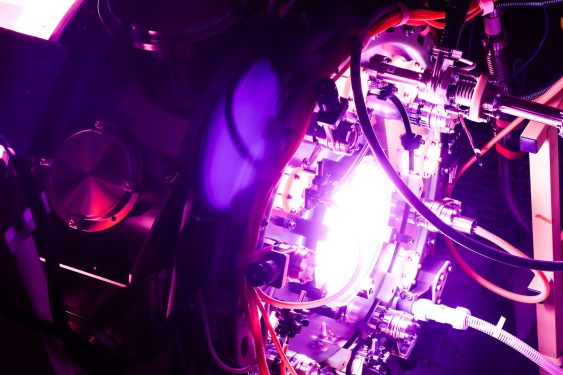
The company is currently operating its Polaris prototype. In February, it generated plasmas reaching 150 million degrees Celsius, approaching the 200 million degrees Celsius believed necessary for commercial operations. Helion raised 425 million dollars last year from investors including Sam Altman, Mithril, Lightspeed, and SoftBank. This follows a similar power purchase agreement Helion signed with Microsoft, another OpenAI partner, in 2023 for power starting in 2028.
Sam Altman’s influence appears connected to these strategic energy deals. Although he has reportedly stepped down as chair of Helion’s board and recused himself from the OpenAI discussions, he previously took a similar step with Oklo, a small modular nuclear reactor company. Altman left his position as board chair of Oklo last year, a move described as allowing that company to explore partnerships with leading AI firms, including potentially OpenAI.