
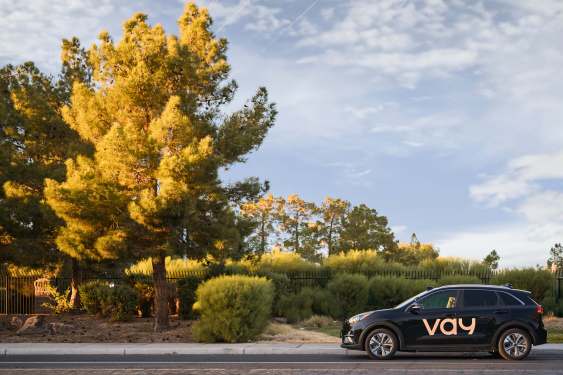
Autonomous vehicles are currently a major focus, making it easier for smaller companies to secure funding. Vay, a German startup that provides remote-controlled rental cars, will receive sixty million dollars in cash from Singaporean technology company Grab. The deal was announced on Monday and is pending regulatory approval, with closure expected by the end of the year. Vay’s CEO stated that an additional three hundred fifty million dollars may follow as joint milestones are achieved within the first year.
The Berlin-based startup uses its technology and human operators to remotely drive rental cars to and from customers. Vay is not yet commercially deployed in real traffic in Germany, where regulatory clarity was only recently achieved. However, the company is currently operating in Las Vegas. Vay now plans to use Grab’s investment to scale and expand its operations in the United States.
To unlock additional investment from Grab, Vay will need to hit specific milestones in the US. These include the number of US cities covered, regulatory approvals obtained, and overall consumer revenue. The United States is experiencing increased competition and rapidly expanding offerings in various forms of remote driving. For instance, Alphabet-owned Waymo recently announced it would deploy its robotaxi service in Detroit, Las Vegas, and San Diego. Although publicly traded on the Nasdaq, Grab does not operate in the US and will limit itself to supporting Vay’s growth there.
Vay describes its driverless car rental service as complementary to robotaxis. Grab’s cofounder sees Vay as serving a growing segment of consumers who prefer not to be car owners. Vay’s customers are required to have a driving license. Once the car is delivered, the user takes over and drives it like a regular car. A key benefit is that users do not need to find parking. Vay states its service costs about half the price of ride-hailing due to this hybrid approach and its hardware-light system.
The two companies also plan to explore synergies between their businesses in Southeast Asia. Grab calls itself the everyday everything app, offering an all-in-one platform for taxi services, ride hailing, transport, express grocery shopping, food delivery, digital payments, and financial services. With a growing interest in mobility, Grab has recently invested in other autonomous driving tech startups, including May Mobility from the US and WeRide from China.
The synergies between Grab and Vay may be technological. For example, driving data collected by Vay could accelerate the training of AI models to improve autonomous driving. This aligns with Vay’s vision to become more than an electric rental car fleet. The company has already expanded into commercial and business-to-business services and closed a partnership with self-driving truck company Kodiak Robotics. Ultimately, Vay aims to build a global remote driving platform.
According to Crunchbase, Vay had previously raised one hundred thirty-one point eight million dollars from backers including Kinnevik, Coatue, and Eurazeo. If fully unlocked, Grab’s investment would provide a significant boost. However, with Nvidia announcing plans to invest five hundred million dollars into British self-driving tech startup Wayve, the competitive race is only just beginning.