
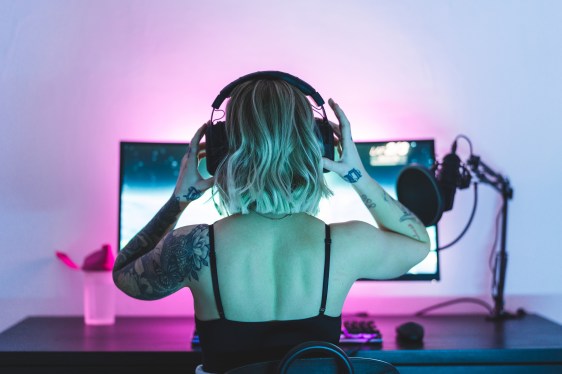
You have likely experienced that moment with a friend. The conversation is flowing, you are making each other laugh, and perhaps you even say something surprisingly insightful. Then someone suggests it: “We should start a podcast.” Most of the time, that idea fades as quickly as it came. This is not necessarily because it is a bad idea, but because actually making a podcast has always been a pain. Between recording setups, editing software, and promotion, many argue the barrier to entry is higher than expected. A new platform called Rebel Audio is trying to close that gap.
Rebel Audio positions itself as an all-in-one podcasting platform designed for first-time and early-stage creators. The idea is simple. Instead of juggling multiple tools, subscriptions, and workflows, podcasters can create their show, record it, edit it, upload cover artwork, create transcripts, clip content for social media, and publish, all without ever leaving the platform. Rebel Audio launched a private beta with a waitlist earlier this month, and it recently secured 3.8 million dollars in an oversubscribed seed round. This suggests investors see real opportunity in simplifying the podcasting process. An official rollout to the public begins on May 30.
The timing of the launch makes sense. Podcasting is exploding, with the industry projected to reach 114.5 billion dollars by 2030. According to statistics, more than 584 million people listened to podcasts in 2025, with predictions that this number will rise to 619 million by 2026.
Competitors like Spotify for Creators have already adopted a similar all-in-one approach, offering tools like unlimited hosting, video podcast uploads, audience analytics, and monetization through ads and subscriptions. However, Rebel Audio argues that none of these solutions deliver a truly comprehensive creation suite in the way its platform aims to. Other popular rivals include Riverside, Adobe Audition, and Descript.
Monetization is another core part of the pitch. Rather than treating revenue as something that comes later, Rebel Audio integrates it from the beginning. Creators can tap into advertising, brand partnerships, dynamic ad insertion, and listener subscriptions integrated within the platform.
Unsurprisingly, Rebel Audio’s experience is also heavily powered by AI. The platform includes an AI assistant that helps with everything from generating show names and descriptions to suggesting ideas and producing cover art based on a concept. There are also AI-powered transcription, dubbing, and translation capabilities, as well as voice cloning for ad reads.
However, building a podcasting platform centered around AI could introduce criticism. The use of AI-generated images and voice cloning remains a sensitive topic across the creative industry. Concerns around training data, originality, and ownership continue to surface, and some creators remain wary of tools that blur those lines. Streaming platforms have already had to address issues related to low-quality, mass-produced AI content.
Rebel Audio states that it has implemented guardrails to address these concerns. Voice cloning is opt-in and requires users to confirm they have the rights to use a given voice, and the platform includes safeguards aimed at preventing deepfake content. Similarly, the company says its AI-generated cover art tools are designed with moderation systems to block inappropriate or non-compliant imagery.
Rebel Audio was developed in partnership with AI consulting firm Lattice Partners. Behind the scenes, the company’s leadership brings a lot of industry experience. Founder Jared Gutstadt previously launched production company Audio Up in 2020. Rebel Audio plans to migrate Audio Up’s catalog onto the platform, including shows involving big names like Machine Gun Kelly, Anthony Anderson, Dennis Quaid, Jason Alexander, and Luke Wilson.
The broader team includes veterans from companies like MGM and DreamWorks, and even Mark Burnett has joined as an advisor. Burnett is the producer behind shows like “Survivor,” “The Voice,” and “Shark Tank.”
Regarding pricing, the platform is structured in tiers. It starts with a basic plan at fifteen dollars per month that offers AI-assisted production, hosting, and distribution to all major platforms. A Plus plan at thirty-five dollars per month includes video hosting and voice cloning for ad reads. It scales up to a full Pro package at seventy dollars per month that includes dynamic ad insertion, listener subscriptions, translation, and dubbing.