
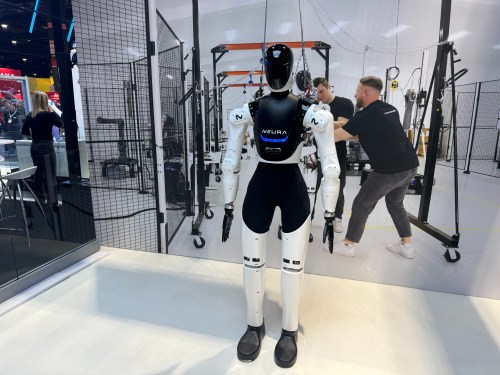
German robotics startup Neura Robotics has formed a partnership with semiconductor giant Qualcomm to develop the next generation of robots and physical AI. This agreement represents the latest collaboration in the emerging physical AI industry, linking robotics startups with larger technology hardware and software firms.
While no specific products were detailed in the announcement, the companies will jointly work to create the foundational “brain and nervous system” for robots. Their goal is to accelerate the real-world deployment of humanoid and general-purpose robots across both domestic and industrial environments.
As part of the collaboration, Neura will utilize Qualcomm’s Dragonwing Robotics IQ10 processors as reference designs within its robots. This IQ10 series, unveiled earlier this year, is engineered to power autonomous mobile robots and humanoids. Neura also intends to employ its Neuraverse robotic simulation and training platform, released in June 2025, to test and refine robots operating on Qualcomm’s IQ10 processors.
David Reger, CEO and founder of Neura Robotics, stated that this collaboration is a major step toward realizing physical AI that is open, scalable, and trusted. He explained that combining Neura’s cognitive robotics platforms and ecosystem with Qualcomm’s leadership in edge AI and connectivity aims to accelerate a future where cognitive robots work safely alongside humans in various industries and everyday life.
This partnership is a logical move for both parties and illustrates a strategy likely to grow popular among robotics companies seeking to bring their products to market. For example, Boston Dynamics recently entered a strategic partnership with Google DeepMind to speed up the development of its Atlas humanoid robot using Google’s AI foundational models.
Although the Boston Dynamics and Neura partnerships focus on different technologies—AI models versus chips—they share a common theme. Rather than simply being customers of technology vendors, these robotics companies are forming deeper partnerships to better integrate and utilize these core technologies.
A robotics company with strong software expertise can find a smoother and more cost-effective path to market and scale by partnering with hardware companies that have already solved complex technical challenges, such as creating dexterous robotic hands. In this case, Neura gains the ability to build and test robots optimized for the chips they use, while Qualcomm receives direct insight into how robotics firms apply its processors.
As more AI companies, like Nvidia, view physical AI as the next major market for their technology, they will seek a direct role in how their technology is implemented. The result is that we should anticipate seeing many more such partnerships in the future.