
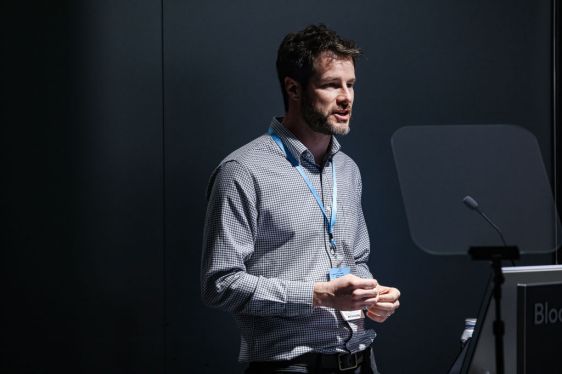
Pebble’s founder, Eric Migicovsky, is doing things differently with his reboot of the Pebble smartwatch brand and an AI ring. The team is small, inventory isn’t being manufactured before it’s sold, and there’s no outside funding. Most importantly, he says the new company, Core Devices, is “not a startup.”
“We’ve structured this entire business around being a sustainable, profitable, and hopefully, long-running enterprise, but not a startup,” Migicovsky explained. He clarified that while startups are good for the world and necessary to build really new ideas, this reboot is not a new idea. It is an old idea that they are just bringing back.
The Pebble founder said he has learned a lot from his earlier efforts, including what not to do. The original Pebble company was sold to Fitbit in 2016 for around $40 million; Fitbit was later acquired by Google for $2.1 billion. Just before its exit, Migicovsky’s team had been scrambling. Christmas 2015 had put Pebble into a tailspin because the company had bought too much inventory.
“Hardware is different from software. You have to predict ahead of time how much you’re going to sell, because you need to build the hardware,” Migicovsky explained. Pebble’s team had estimated they would do $102 million in sales that year, but they did only $82 million. That left the company with unsold inventory that had to be sold at a discount, upsetting retail partners. Meanwhile, Pebble didn’t have enough money to finish developing new products, leading to rapid layoffs and, ultimately, an exit.
“I think I lost sight of the vision of why I was building Pebble,” Migicovsky admitted. He said that at the beginning, the vision was clear, but the company later meandered and tried to do things that didn’t feel authentic, like health tracking.
This time, Migicovsky aims to take a different path. The new Pebble smartwatches aren’t meant to be for everyone. They are for people like himself, who enjoy hacking, building, and creating. They are not for fitness enthusiasts or those wanting a smartphone on their wrist.
“I want a companion to my phone, rather than a replacement for my phone. I want it to be more like a Swatch than a Rolex. I want it to be a little bit more fun, casual, playful, and plasticky,” he said. He added that he is now okay with a watch that doesn’t try to do it all, embracing a limited vision and scope.
Under Core Devices, the team has announced the Pebble Time 2 smartwatch, a round-faced Pebble Round 2, and a $75 AI smart ring called the Index 01. The company today is not a large team of 180 employees working with distributors. Instead, there are only five people, and it sells directly to consumers.
The foundation remains Pebble OS, the smartwatch’s operating system, which was open-sourced by Google. Migicovsky recalls getting a crucial contact at a child’s birthday party, which led to an email request. A year later, Google followed through. He expressed gratitude, stating that without Pebble OS, the reboot would have been impossible, as it originally took a team of 30 to 40 people years to build.
So far, the new structure is working. The company has sold 25,000 pre-orders for its smartwatches and around 5,000 for its newer AI ring. Pebble pre-orders are currently shipping about six months out, but Migicovsky said the team will tighten that to a couple of weeks. The Pebble App Store features 15,000 watch faces and apps, and the team will soon relaunch the SDK for developers.
Migicovsky says the team is in a comfortable spot where their expenses are paid and they can finance new projects. The team is not done yet. While he wouldn’t detail what hardware Core Devices may ship next, he said they will be things he personally wants to have. He hinted that the next products will be fun, casual, simple hardware that makes life a little better, one block at a time, and they will work together.