
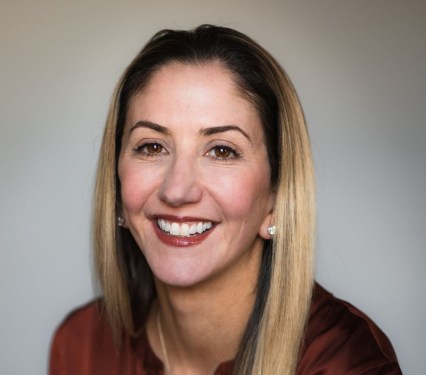
OpenAI’s first sales leader, Aliisa Rosenthal, has embarked on a new career in venture capital. She is joining Acrew Capital as a general partner, working alongside founding partner Lauren Kolodny and the firm’s other partners. Rosenthal left OpenAI about eight months ago after a three-year period that saw the launch of major products like DALL·E, ChatGPT, and Sora.
She was not initially looking to join a venture fund, instead meeting with numerous AI startups. However, after scaling OpenAI’s enterprise sales team from two people to hundreds, she saw the appeal of venture capital. It offered a chance to help a portfolio of startups with their go-to-market strategies, rather than just one.
Her experience at OpenAI provided deep insight into buyer behavior and the gap between what organizations believe is possible with AI and what they can actually deploy today. She also gained firsthand perspective on what kind of competitive advantage, or moat, an AI startup can build to avoid vulnerability when large model makers like OpenAI launch competing products.
Rosenthal does not believe OpenAI will pursue every potential enterprise application. She sees specialization as one key moat for startups. Additionally, she believes “context” will be crucial. This refers to the information an AI stores in its memory as it works on requests. She sees innovation moving beyond basic Retrieval-Augmented Generation toward persistent context graphs, which are dynamic, adaptable, and scalable. Significant technological development is still needed in areas like memory and reasoning.
She argues that enterprise applications which bake in this context layer will have a major advantage. The ownership and management of context will become a significant moat for AI products.
Another opportunity she identifies is for startups not building on the most expensive, state-of-the-art models from major labs. She sees room in the market for cheaper, lighter-weight models that innovate on inference costs. These models may not top benchmark leaderboards but are still very useful and more affordable.
Rosenthal is particularly excited to invest at the application layer. She is interested in durable applications built on various models, seeking startups with interesting use cases or those that use AI to help enterprise employees work more efficiently.
To find these startups, she will tap into her network among OpenAI’s alumni. Now that the company is a decade old, its alumni network has grown, with many founding well-funded startups. There is also a growing precedent for former high-level OpenAI employees to become seed-stage investors, following paths like former head of consumer products Peter Deng, who joined Felicis.
Rosenthal may have a secret weapon to win deals: deep contacts among AI enterprise users. These are the buyers and beta testers that early AI startups critically need. She observes a large gap between what enterprises understand AI can do for them and its full potential, leaving a vast green field for new applications and companies.