
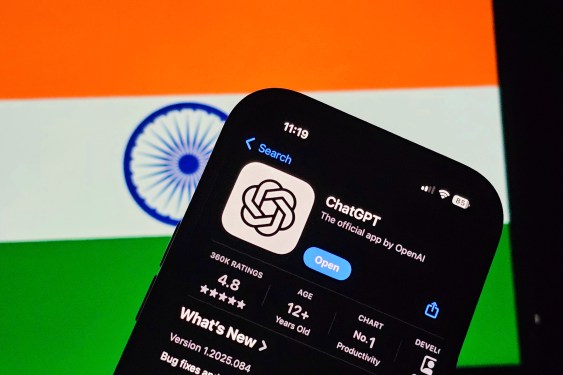
OpenAI has found a strong product-market fit with young users in India. The company revealed that nearly half of all messages sent to ChatGPT in the country come from users between 18 and 24 years of age. Furthermore, users under 30 account for a striking 80% of messages.
Indians primarily use ChatGPT for work, with 35% of messages relating to professional tasks. This is higher than the global average of 30%. The coding assistant, Codex, is particularly popular. OpenAI states that usage in India is three times higher than the global median, and weekly usage has quadrupled since the tool’s Mac app launched two weeks ago. Users in India also ask three times as many coding-related questions as the median.
These findings align with a report from Anthropic, which noted that 45.2% of tasks performed on its Claude AI in India map to software-related use cases.
Outside of work, user requests to ChatGPT in India are diverse. Thirty-five percent of messages seek guidance, 20% ask for general information, and another 20% request writing assistance or content creation.
India is OpenAI’s second-largest market, boasting over 100 million weekly users. The company has actively courted the Indian market with a subscription tier priced under five dollars and past promotional campaigns offering free access.
OpenAI’s chief economist, Ronnie Chatterji, commented on the rapid adoption, stating that AI is moving faster than our ability to measure it. He emphasized the company’s goal to ground India’s AI debate in facts through real-world evidence.
The company is deepening its investment in India. It is opening new offices in Mumbai and Bengaluru this year and has signed a major partnership with the Tata Group. This partnership secures 100 megawatts of AI compute capacity and will distribute ChatGPT Enterprise within Tata’s IT services subsidiary, TCS.
OpenAI has also formed agreements with several prominent Indian companies, including fintech firm Pine Labs, travel platforms Ixigo and MakeMyTrip, and food delivery company Eternal. Additionally, the AI lab has partnered with educational institutions to distribute its tools to more than 100,000 students over the next six years.
This activity coincides with a major AI summit being hosted in New Delhi, underscoring India’s growing importance in the global AI landscape.