
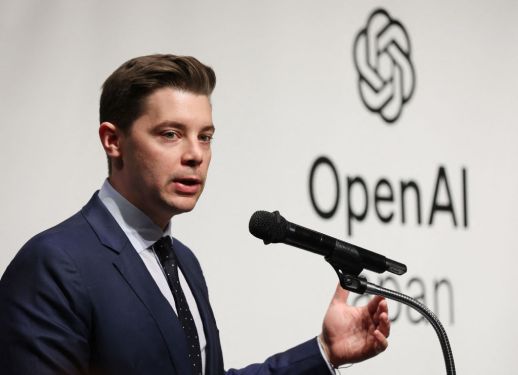
Earlier this month, OpenAI launched a new platform called OpenAI Frontier for enterprises to build and manage agents. However, OpenAI COO Brad Lightcap noted that businesses have not yet seen AI adoption at scale. Speaking at the India AI summit in New Delhi, Lightcap explained that while powerful AI systems are available for individual use, integrating them into complex enterprise organizations with many teams, goals, and systems remains a challenge.
There is significant discussion about AI agents taking over business processes and claims that traditional software models are ending. While such predictions have influenced market trends, they have not fully materialized. Lightcap pointed out that OpenAI itself was a massive user of traditional enterprise software like Slack last year, illustrating how AI firms still rely on conventional tools.
OpenAI’s financial performance shows strong demand. In January, CFO Sarah Friar indicated the company’s revenue is rising, with over $20 billion in annualized revenue by the end of 2025. Lightcap confirmed robust demand, stating the company often manages an excess of it and is working to meet global needs.
OpenAI is also considering how to measure enterprise success. Lightcap said the company will evaluate its Frontier platform based on business outcomes rather than traditional metrics like seat licenses, though pricing details have not been shared.
Lightcap described Frontier as an experiment to integrate AI into the complex areas of business, which will provide valuable learning. Shortly after this discussion, OpenAI announced partnerships with major consultancies like Boston Consulting Group, McKinsey, Accenture, and Capgemini to deploy its technology in enterprises. This move coincides with competitors like Anthropic launching their own enterprise tools.
Regarding recent acquisitions, OpenAI does not yet have a clear plan for integrating the open-source tool OpenClaw, but Lightcap said it offers a glimpse into a future where agents can perform almost any computer-based task.
At the India AI summit, OpenAI highlighted its growth in the Indian market. India is the second-largest user base for ChatGPT outside the U.S., with over 100 million weekly users. Lightcap emphasized the importance of voice technology in India, noting its ability to operate in low-bandwidth environments and increase access.
The company has also signed an enterprise contract in India for tool usage and compute deployment. Lightcap observed that India ranks fourth in enterprise seats in Asia, indicating significant room for expansion. OpenAI plans to open new offices in Mumbai and Bengaluru, primarily for sales and go-to-market functions, with the potential for technical roles in the future.
The rise of AI also brings concerns about job impacts, particularly in India’s prominent IT services and Business Process Outsourcing industry. Recent market fluctuations reflect fears that AI automation could reduce demand in areas like coding. Lightcap acknowledged that jobs will inevitably change over time, and while the specifics are uncertain, OpenAI aims to remain grounded and empathetic to shifts in the employment landscape.