
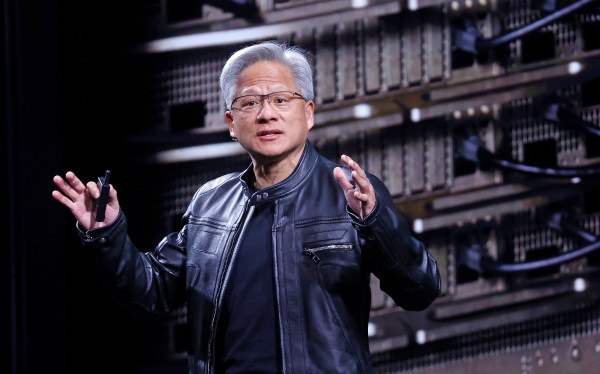
Today at the Consumer Electronics Show, Nvidia CEO Jensen Huang officially launched the company’s new Rubin computing architecture, describing it as the state of the art in AI hardware. The new architecture is currently in production and is expected to ramp up further in the second half of the year. Huang explained to the audience that Vera Rubin is designed to address a fundamental challenge: the skyrocketing amount of computation necessary for artificial intelligence. He confirmed that Vera Rubin is now in full production.
The Rubin architecture, first announced in 2024, is the latest result of Nvidia’s relentless hardware development cycle, a cycle that has transformed the company into the world’s most valuable corporation. This new architecture will succeed the Blackwell architecture, which itself replaced the earlier Hopper and Lovelace architectures.
Rubin chips are already slated for use by nearly every major cloud provider. This includes high-profile partnerships with companies like Anthropic, OpenAI, and Amazon Web Services. Rubin systems will also power HPE’s Blue Lion supercomputer and the upcoming Doudna supercomputer at Lawrence Berkeley National Laboratory.
Named for astronomer Vera Florence Cooper Rubin, the architecture consists of six separate chips designed to work together. The Rubin GPU is at the center, but the architecture also tackles growing bottlenecks in storage and interconnection with improvements to the Bluefield and NVLink systems. It additionally introduces a new Vera CPU, designed specifically for agentic reasoning.
Explaining the benefits of the new storage, Nvidia’s senior director of AI infrastructure solutions, Dion Harris, pointed to the increasing memory demands of modern AI systems. He noted that new workflows, like agentic AI or long-term tasks, place significant stress on the KV cache, a memory system AI models use to condense inputs. Harris stated that Nvidia has introduced a new tier of external storage that connects to the compute device, allowing for a much more efficient scaling of the storage pool.
As expected, the new architecture represents a major advance in both speed and power efficiency. According to Nvidia’s testing, the Rubin architecture operates three and a half times faster than the previous Blackwell architecture on model-training tasks and five times faster on inference tasks, reaching up to 50 petaflops. The new platform also supports eight times more inference compute per watt.
These new capabilities from Rubin arrive amid intense competition to build AI infrastructure. Both AI labs and cloud providers have been scrambling to secure Nvidia chips and the facilities needed to power them. On an earnings call in October 2025, Huang estimated that between three and four trillion dollars will be spent on AI infrastructure over the next five years.