
After years in the wilderness, it is a good time to be a nuclear startup. Bret Kugelmass, founder and CEO of Last Energy, explained the shift in perception. He said that for the first half a decade he had to convince people why nuclear was important, but now everyone simply acknowledges it as a key part of the solution.
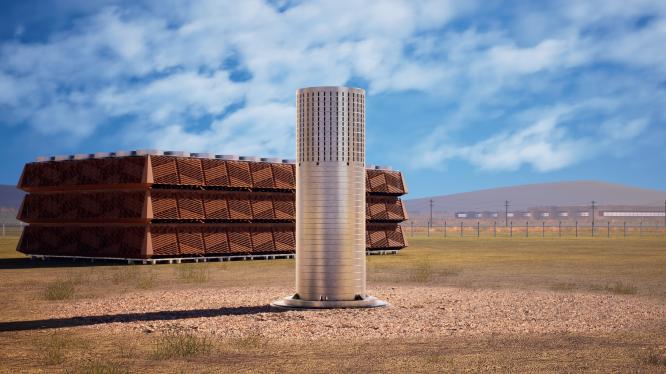
Last Energy is building small modular reactors, which are compact nuclear power plants that can be mass-manufactured to reduce costs. The company’s reactors are designed to produce 20 megawatts of electricity, enough to power roughly 15,000 homes.
The company has momentum. Last Energy recently closed a 100 million dollar Series C funding round led by the Astera Institute, with participation from several other investment firms.
It joins a slew of nuclear startups that have raised funding in recent months, buoyed by data centers’ insatiable power demands. For example, Google-backed X-Energy raised 700 million dollars last month, while Antares raised 96 million dollars two weeks ago. In August, Aalo Atomics raised 100 million dollars to build its prototype reactor.
What sets Last Energy apart is its approach. The company is using an old reactor design developed by the government decades ago. The initial design for the pressurized water reactor was built for the NS Savannah, the world’s first nuclear-powered merchant ship. That ship’s power plant was about one-tenth the size of Last Energy’s planned commercial reactor. The company’s updated design should produce 20 megawatts of electricity.
The company is starting smaller, though. First, Last Energy is building a 5-megawatt pilot reactor at a site it is leasing from Texas A&M. The new funding will fully fund the pilot project and help the company start delivering its first commercial products. Last Energy hopes to turn on the pilot reactor next year, with its 20-megawatt commercial-scale unit entering production in 2028.
Last Energy’s reactor is not designed to be serviced during its lifetime. Instead, the company is permanently encasing each core in 1,000 tons of steel. Kugelmass estimates the metal will cost around 1 million dollars, noting that nuclear-grade concrete is not cheaper.
The reactors will arrive on site fueled with six years’ worth of uranium. Apart from electrical and control connections, there are no other penetrations that break the steel wall. Heat from the fission reactions warms the steel, and water flowing through pipes on the outside harvests that heat to spin a steam turbine.
When the reactor’s time is up, Last Energy will leave it on site, with the steel chamber serving as the waste cask, eliminating the need for separate disposal.
The hope is that this approach, coupled with manufacturing advances, will drive down the price of nuclear power. Kugelmass would not commit to a specific price, instead pointing to other industries that have halved prices for every tenfold increase in production. He acknowledged that nuclear may not see that exact trend due to special regulatory costs, but that is the type of trajectory they aim for. The company thinks in terms of tens of thousands of units, not ones and twos.