
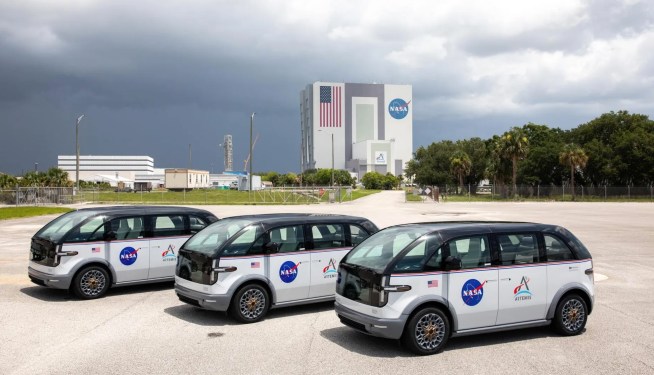
NASA and the United States Postal Service have ceased using electric vans manufactured by the now-bankrupt EV startup Canoo. This decision stands despite a claim from the company’s former CEO that he would provide ongoing support for the vehicles.
NASA originally purchased three of Canoo’s electric vans in 2023. The space agency intended to use them to transport astronauts to the launchpad for its Artemis missions to the Moon. NASA stated that Canoo was no longer able to meet its mission requirements. As of October, NASA reported it is now leasing the Airstream-built “Astrovan” from Boeing, a vehicle the aerospace company commissioned for its own crewed space missions.
Separately, the USPS confirmed that the six vehicles it purchased for evaluation purposes in 2024 are no longer in use. The postal service stated the evaluation has been completed and no further investments are anticipated. The USPS declined to share any details or final results from that evaluation.
Canoo also provided at least one demonstration vehicle to the Department of Defense before its bankruptcy. The DOD did not respond to inquiries about whether it has continued using the van.
Canoo filed for bankruptcy in January 2025 following years of financial struggles and an inability to establish a market for its electric vans. Soon after, former CEO Tony Aquila made a $4 million bid for the startup’s assets in March. Aquila told the bankruptcy trustee that a principal motivation for his bid was a desire to honor commitments to provide service and support for certain government programs.
Both NASA and the USPS declined to share whether Aquila ever approached them about supporting the vehicles. Aquila and a lawyer who represented him in the bankruptcy proceedings did not respond to requests for comment.
The bankruptcy judge approved the sale to Aquila in April. He was not the only interested party. As many as eight parties signed nondisclosure agreements to evaluate Canoo’s intellectual property, prototypes, and equipment. A lawyer for Canoo said a handful came close to making a bid.
One interested party was Harbinger, a California-based electric trucking company founded by former Canoo employees. Another was a financier from the U.K. named Charles Garson. Harbinger had accused Canoo of hiding assets and claimed the bankruptcy trustee unfairly favored Aquila by accepting his offer without widely marketing the assets. Garson claimed he was willing to pay up to $20 million, but the judge ruled he did not formalize his bid in time.
The trustee and Canoo’s lawyers argued that Aquila presented the best and most firm bid. They also suggested one unspecified potential bidder could have raised concerns with the Committee on Foreign Investment in the United States due to foreign ownership, noting this was a particular issue given the contracts with NASA, the USPS, and the DOD. Harbinger and Garson declined to comment.