
Product demos receive a lot of attention, but software development more often involves tasks like debugging, quality assurance, and testing. This is the dull but critical work that keeps software running correctly. As developers look to automate more of their workloads, this work is increasingly being handled by AI.
On Monday, the AI testing startup Momentic announced it raised $15 million in a Series A funding round. The round was led by Standard Capital and included participation from Dropbox Ventures. Existing investors from Y Combinator, FCVC, Transpose Platform, and Karman Ventures also joined the round. This new funding builds on a $3.7 million seed round that the company announced earlier.
Momentic creates tools for software testing and verification, a niche currently occupied by open-source frameworks like Playwright and Selenium. While those tools offer complex and fine-grained controls, Momentic is counting on AI to make the testing process simple and effective.
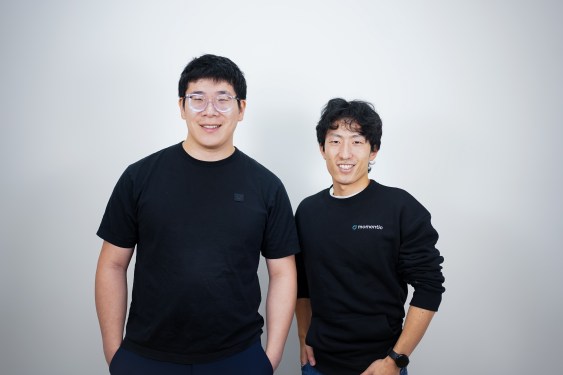
The company helps customers ensure their products work as intended. They can describe their critical user flows in plain English, and the AI will automate the test. Co-founders Wei-Wei Wu and Jeff An both have backgrounds in developer tooling at companies like Qualtrics and WeWork. Wu is particularly proud of his contributions to the open-source Node.js project.
From Wu’s perspective, the problem of verifying code has been a constant challenge. He stated that testing has been the biggest pain point for every team he has ever worked with.
Momentic’s AI-driven approach has already attracted a number of clients. The company currently has 2,600 users, including companies like Notion, Xero, Bilt, Webflow, and Retool. Wu was hesitant to share specific revenue and profitability figures but said the product has shown sufficient growth to convince investors.
A significant advantage of automating tests is the ability to perform them easily at scale. This can drive the total test volume to levels that were previously impossible. Wu estimates that in the last month alone, the company automated more than 200 million test steps.
The company’s biggest competitor may be the foundation model providers themselves. Both OpenAI and Anthropic offer tutorials on agentic testing, building on their models’ growing computer use capabilities. As those models become more sophisticated, the opportunity for enterprise SaaS companies like Momentic could potentially narrow.
For now, Wu is focused on developing his product with the new funding. The company launched support for mobile environments recently and hopes to build more sophisticated test-case management as it expands its team.
Wu believes the rise of automated coding will produce many new applications, which in turn will create more demand for products like his. He stated that all of these new apps need testing, their developers care about quality, and Momentic is going to provide it for them.