
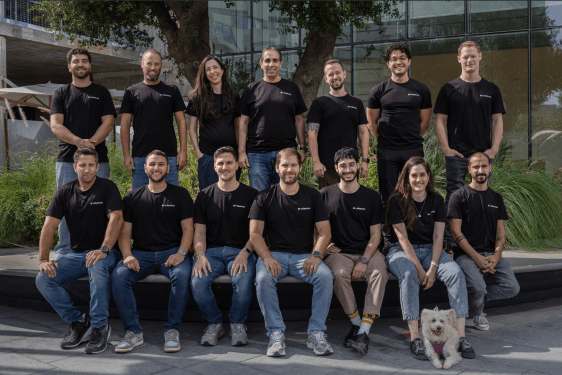
Generative AI has become a key part of coding workflows, but most companies struggle to track its use, let alone measure its return on investment. Israeli startup Milestone hopes to help with a platform designed to correlate AI tool usage with engineering metrics, including code quality.
A significant requirement is that companies must give Milestone access to their codebases. This was a bet that investors initially questioned, according to CEO and co-founder Liad Elidan. With customers including Kayak, Monday, and Sapiens, the startup has now raised a ten million dollar seed funding round. The round was led by San Francisco-based venture firm Heavybit and Israeli fund Hanaco Ventures.
In an unusual arrangement, Elidan and Milestone’s CTO had gone years without meeting in person by the time they started fundraising. Unlike most of the Israel-based team members, Professor Stephen Barrett lives in Ireland and teaches computer science at Trinity College Dublin, where Elidan was once his student. The two bonded through software projects.
Despite the distance, the duo kept in touch over the years and eventually decided to found a startup focused on engineering efficiency. This happened just as coding assistants and other code-generation tools were taking off. GitHub Copilot has since crossed the bar of twenty million users, but companies still lack visibility into how these tools are used and how they are impacting productivity.
According to Elidan, Milestone answers these questions by relying on four pillars: codebases, project management platforms, team structure, and the code generation tools themselves. This creates what he describes as a genAI data lake. In practice, this gives organizations actionable data on which teams use AI and to what effect, all derived from their own information.
Armed with this data, managers under constant pressure to leverage AI for productivity gains can measure feature delivery speed. They can also find out if recent bugs were caused by AI-generated code and make informed decisions on where to implement these tools. This also gives Milestone a front-row seat on ROI, the holy grail question it aims to answer granularly for its customers. On a high level, Elidan said they have no customers who used Milestone and decided to revoke all their GenAI licenses. Instead, they want to try more GenAI tools.
This fast-paced adoption means Milestone has to keep up with a rapidly evolving landscape. The technology has progressed from auto-completes to chat and then to agentic-based chat, and it keeps changing. Barrett’s academic background helps the team understand the transformation its customers are going through. The professor stated that a lot of the ways we used to think about engineering are going to have to change. He believes that in some sense, AI is filling out the team, and engineers are now becoming managers.
To keep up with the tools powering this wave, Milestone says it has partnered with many vendors, such as GitHub, Augment Code, Qodo, Continue, and Atlassian. Atlassian, the company that powers Jira, had its venture arm, Atlassian Ventures, participate in this seed round. The round was also supported by angel investors, including GitHub cofounder Tom Preston-Werner, former AT&T CEO John Donovan, Accenture’s senior tech advisor Paul Daugherty, and Datadog’s ex-president Amit Agrawal. Elidan said these investors understand that what Milestone is building is relevant for the enterprise market.
That enterprise focus was deliberate from day one. Milestone even said no to prospective clients that were too small, which Elidan described as a very hard thing to do. This decision gave the startup clarity around a roadmap requiring enterprise credentials and features. Focus would be his main advice to other founders, and Milestone is taking it. The startup will not expand into measuring GenAI’s impact on marketing or other functions, even as it grows.