
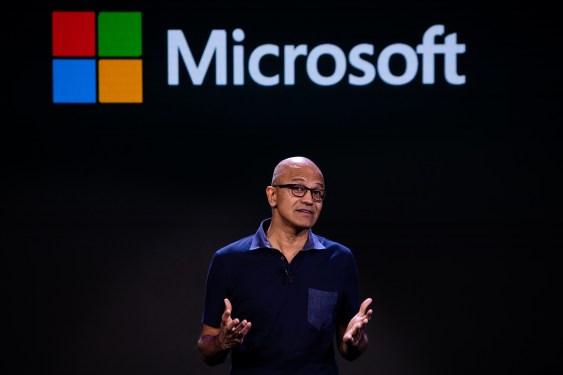
Microsoft plans to invest $17.5 billion in India over the next four years. This investment will expand the company’s artificial intelligence and cloud footprint in the nation. India’s vast online and smartphone user base has made it a critical battleground for global technology companies.
Announced on Tuesday, this represents Microsoft’s largest investment in Asia. From 2026 to 2029, the funds will finance new data centers, AI infrastructure, and skilling programs. This builds upon a separate $3 billion commitment the company made in India earlier in the year.
Microsoft’s move coincides with major U.S. tech companies increasing spending on data centers and AI compute worldwide. India has emerged as a strategic prize due to its fast-growing developer base and one of the world’s largest pools of internet and smartphone users.
This latest push also places pressure on rivals like Google, Amazon, and OpenAI, which are all growing their presence in India. These companies aim to tap demand for cloud services and AI tools from businesses, startups, and government agencies. Furthermore, the investment aligns with the Indian government’s push to accelerate digital infrastructure and AI adoption across various sectors. India seeks to position itself as a global technology hub while addressing concerns around data governance and equitable access.
The announcement came during Microsoft CEO Satya Nadella’s visit to India, following his meeting with Prime Minister Narendra Modi. The company also stated it will open a new data center region in Hyderabad by mid-2026, which will be its largest in India. This new region will comprise three availability zones, a footprint described as roughly the size of two Eden Gardens stadiums. Microsoft will continue expanding its three existing data-center regions in Chennai, Hyderabad, and Pune.
As part of this initiative, Microsoft will collaborate with the Ministry of Labour and Employment to integrate advanced AI capabilities into two flagship digital public platforms: e-Shram and the National Career Service. This aims to offer AI-driven services to more than 310 million informal workers.
These government platforms will utilize Microsoft’s Azure OpenAI Service to provide multilingual access, AI-assisted job matching, predictive analytics on skill and demand trends, automated résumé creation, and personalized pathways.
Microsoft also announced it is rolling out new sovereign cloud options for Indian customers. This includes a Sovereign Public Cloud now available across its India regions and a Sovereign Private Cloud powered by Azure Local. These offerings are designed to help enterprises meet regulatory and data-residency requirements while supporting high-performance workloads with access to the latest Nvidia GPUs and Microsoft 365 services.
Additionally, Microsoft’s skilling efforts are accelerating. Through its “ADVANTA(I)GE India” initiative, the company has trained 5.6 million people since January, surpassing its pace toward a goal of training 10 million by 2030. These programs have enabled more than 125,000 individuals to secure jobs or start businesses. Microsoft is now doubling its earlier commitment and aims to equip 20 million Indians with basic AI skills by 2030, working with government agencies and industry partners.
Microsoft’s investment follows Google’s recent announcement of a $15 billion plan to build an AI hub and data-center infrastructure in India. That commitment was itself the company’s largest in the country, building on an earlier $10 billion pledge.
In recent months, India has become an attractive market for global tech companies seeking to expand their AI footprint. The draw includes the country’s vast base of internet subscribers, hundreds of millions of smartphone users, a fast-growing startup ecosystem, and the government’s aggressive digitization agenda. This push has accelerated, with OpenAI and Anthropic setting up offices in India, and companies like Google and Perplexity striking partnerships with major telecom operators Reliance Jio and Bharti Airtel to deepen their market reach.
However, global tech firms face significant constraints in India. Data-center expansion is challenged by patchy power availability, high energy costs, and water scarcity in several regions. These factors could slow the build-out of AI infrastructure and raise operating expenses for cloud providers.
Despite these challenges, the Indian government has been pushing aggressively to attract more big-tech investment. It frames large-scale data-center and AI projects as central to its economic and digital-public-infrastructure ambitions. New Delhi has rolled out incentives for AI and semiconductor projects, eased some regulatory hurdles, and encouraged partnerships with domestic firms to anchor more of the global AI value chain in India.
A company statement from Puneet Chandok, president of Microsoft India and South Asia, said, “Microsoft has been part of India’s fabric for more than three decades. As the nation moves confidently into its AI-first future, we are proud to stand as a trusted partner in advancing the infrastructure, innovation, and opportunity that can power a billion dreams.”
Microsoft already employs more than 22,000 people across several Indian cities. These include engineering teams that build AI products such as Copilot Studio, Azure AI Search, and speech and translation tools for global markets, while also supporting the company’s domestic operations.