
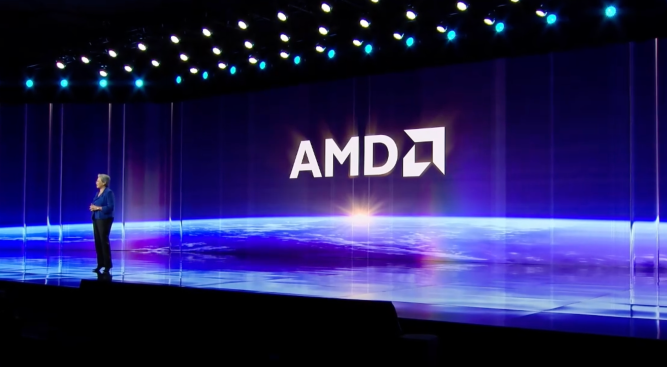
Meta has announced a multiyear agreement to purchase potentially up to one hundred billion dollars worth of AMD chips. This substantial order is enough to drive roughly six gigawatts of data center power demand.
As part of the deal, AMD has issued Meta a performance-based warrant for up to 160 million shares of AMD common stock, which represents about ten percent of the company. The shares are priced at one cent each and will vest according to certain milestones. A full stock award is conditional on AMD’s share price, which would need to reach six hundred dollars for Meta to receive its final tranche. AMD’s stock closed at 196.60 dollars on the day before the announcement.
Under the agreement, Meta will purchase AMD’s MI540 series of GPUs and its latest generation of CPUs. CPUs are increasingly seen as a core pillar of the AI inference compute stack because they are efficient, easier to scale, and reduce reliance on any single supplier.
AMD CEO Lisa Su stated that the CPU market is absolutely on fire, with significant demand continuing to grow as a result of AI infrastructure deployments. She noted that AMD’s portfolio is in an extremely good position.
AMD has been slowly gaining ground as AI firms seek to diversify beyond Nvidia, the longstanding leader in AI chips. Last October, AMD and OpenAI struck a similar deal trading equity for an agreement to buy chips.
Meta CEO Mark Zuckerberg called the partnership with AMD an important step as the company diversifies its compute and works towards what he terms personal superintelligence. He defines this as AI systems designed to deeply understand and empower individuals in their everyday lives.
Meta has pledged to invest at least six hundred billion dollars in U.S. data centers and AI infrastructure over the next several years, including a projected capital expenditure of 135 billion dollars in 2026. The company recently unveiled plans for a ten billion dollar gas-powered data center campus in Indiana designed for one gigawatt of compute capacity.
The AMD partnership comes just weeks after Meta struck a multiyear deal to expand its data centers with millions of Nvidia’s latest CPUs and GPUs. Meta is also developing its own in-house chips, though that project has reportedly hit delays.