
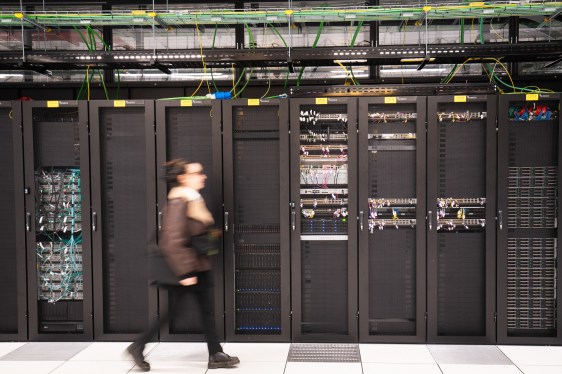
The current mania around data centers has many companies looking to become “picks and shovels” providers. These businesses aim to build profitable ventures that support the core activities of selling server access or training leading AI models. MayimFlow, the Built World stage winner at this year’s TechCrunch Disrupt, is a prime example. This startup focuses on one essential task: preventing damaging water leaks.
Data centers use a tremendous amount of water, and even a small leak can present a significant risk. Founder John Khazraee explained that many data centers only have reactive solutions for water leaks. This approach can saddle companies with costly downtime and set them back millions of dollars when a leak occurs.
Khazraee speaks from experience. He spent over fifteen years building infrastructure for IBM, Oracle, and Microsoft. With MayimFlow, he has developed a combination of IoT sensors and edge-deployed machine learning models designed to detect the early signs of an impending leak.
“I’ve noticed these issues in data centers, and the only solution they had was to find out when the leak happens,” he said in an interview. “Then you have to spend a lot of money to remediate the situation. You have to turn off the servers, and data services are disrupted. So I decided to do something about it.”
To take on this challenge, Khazraee assembled a small, experienced team. Jim Wong, MayimFlow’s chief strategy officer, has spent decades working with data centers. Chief technology officer Ray Lok has built a career in water management and IoT infrastructure.
Beyond preventing the serious consequences of water leaks, there is an element of frugality driving Khazraee’s mission with MayimFlow, which he traces to his childhood.
“I grew up in a family that wasn’t the most well-off,” he said. “My dad would always tell me, ‘Hey, you’re in the shower too long. Are you singing in there?'” As he grew up and studied to become an engineer, Khazraee found himself constantly thinking about how to make things more efficient. In college, he worked at a facility that converted restaurant frying oil into biodiesel, a messy job he appreciated for its efficient end result.
Khazraee is now blending this penchant for efficiency with his team’s deep experience. He believes they can give data center operators a 24 to 48-hour advanced warning that repairs will be needed.
MayimFlow has collected a wealth of sample data from various industrial water systems to make these predictions. The company can provide its own monitoring sensors or plug its machine learning models into a client’s existing hardware.
Khazraee envisions bringing this solution beyond data centers to commercial buildings, hospitals, manufacturing facilities, and possibly even utilities. In his view, any organization that wants to spot leaks early or optimize water usage is a potential customer.
He considers the opportunity so substantial that he has turned down roles at multiple large tech companies while building MayimFlow over the last two years.
“I really believe in the vision. I believe in the impact that we’re making,” he said. “Water is becoming one of those big issues in our world.”