
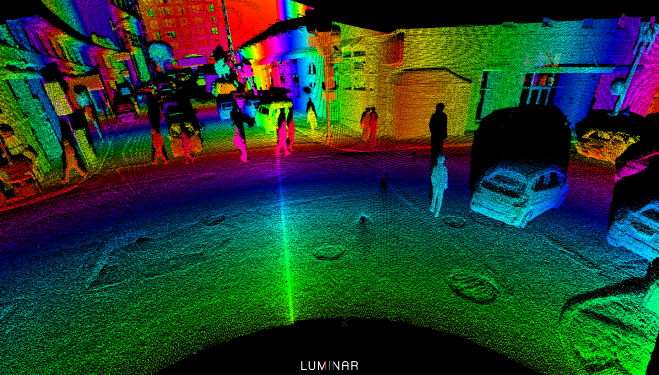
Moments before a bankruptcy judge was set to approve the sale of Luminar’s lidar business, an unidentified party submitted a surprise offer that significantly exceeded the leading bid of $33 million. This last-minute bid, emerging just before a hearing on Tuesday, triggered a series of urgent meetings between Luminar’s leadership, its lawyers, a special transaction committee, and the company’s full board.
Although the new bid was substantially higher, a lawyer for Luminar stated there were “infirmities” in the offer. The company ultimately decided to proceed with the original $33 million bid from MicroVision, which had been selected during an auction the previous Monday.
The identity of the party behind the last-minute offer was not disclosed, but Luminar’s lawyer indicated it was an “insider purchaser,” strongly suggesting it came from company founder Austin Russell. Russell had previously attempted to buy the company late last year before its bankruptcy filing and after his abrupt resignation as CEO. Representatives from his new firm, Russell AI Labs, had earlier expressed interest in bidding for the lidar business during the bankruptcy proceedings.
The hearing continued, and the judge approved the sale to MicroVision. The sale of Luminar’s semiconductor division to a company called Quantum Computing Inc. was also approved. These transactions are expected to close in the coming weeks, after which Luminar will cease to exist, marking the end of one of the more prominent suppliers from the early autonomous vehicle era.
According to MicroVision CEO Glen DeVos, Russell’s original goal of using lidar for self-driving cars will continue at MicroVision. As part of the asset sale, MicroVision will acquire Luminar’s lidar technology and its remaining staff. DeVos expressed hope that some talent laid off prior to the bankruptcy would also join.
DeVos explained that Luminar’s lidar technology fills a crucial gap in MicroVision’s portfolio. While the Redmond, Washington-based company has strong software and short-range lidar teams, it lacked the long-range sensing capability essential for automotive applications. DeVos, with a long career at automotive suppliers Delphi and Aptiv, aims to expand beyond MicroVision’s current markets in industrial use, security, and defense.
He is hopeful that MicroVision can use Luminar’s existing, though troubled, commercial engagements with automakers as a springboard into the automotive industry. This would open a significant new revenue stream. DeVos stated his intention to review every contract, believing that even damaged relationships can potentially be repaired.
Tuesday’s disruptive offer was not the first mysterious bid MicroVision encountered. During the hearing, it was revealed that another unidentified party had been formulating a bid as early as January 12. That bid was problematic from the start, according to Rich Morgner, a managing director at Jeffries, which helped run the sale.
Initially, the bidder’s financing came from a Chinese national company. After Luminar raised regulatory concerns, the bidder replaced its funding with three non-Chinese sources: verified family money, a Caymans-based SPV with a suspiciously round-numbered brokerage statement, and a European family office that never provided proof of funds. Luminar’s lawyers did not reveal this bidder’s identity or confirm if it was the same party from the Tuesday hearing.