
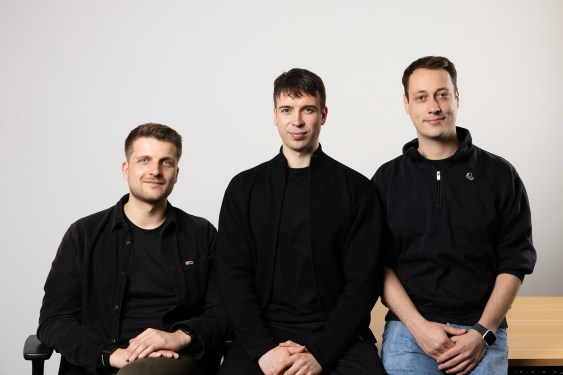
Lio’s co-founders understand from personal experience that procurement, the process enterprises use to purchase services from vendors, is often a bottleneck. Vladimir Keil, the company’s co-founder and CEO, encountered this problem first as an employee at a large company and then again while building his first startup. He told TechCrunch that when selling enterprise software, his team had to go through procurement themselves and saw how manual and fragmented the process remains.
Keil and his team have built an automated platform of AI agents, which is software that can complete tasks on behalf of humans, to help fix some of those fragmented processes. Recently, Lio announced a 30 million dollar Series A funding round led by Andreessen Horowitz. SV Angels, Harry Stebbings, and YC also participated. Lio was part of the Spring 2023 Y Combinator batch. The company has raised 33 million dollars in total funding to date. Keil said the new capital will be used to expand the company throughout the United States and increase the capabilities of Lio’s AI agents, which aim to complete the entire procurement process for enterprise customers.
Procurement is at the heart of enterprise spending, where companies look to buy everything from raw materials to professional services. Each purchase order requires significant focus. One usually has to open Enterprise Resource Planning software, check contract management systems, search the supplier database, run compliance checks, cross-reference budgets, and dig through emails. Keil explained that even with modern eProcurement software, most of the real work is still done manually. Companies are left to build large internal teams or outsource this work, resulting in a slow and expensive process.
Keil had an idea that if the procurement process is largely unstructured data and repetitive workflows, then this is precisely the type of task an AI agent is well-equipped to handle. He teamed up with friends Lukas Heinzman and Till Wagner, and in 2023 the trio launched Lio, a virtual procurement workforce. Lio operates an AI-native platform with agentic infrastructure that completes the entire procurement process.
Keil stated that every previous generation of procurement technology was built on the assumption that humans will do the work and technology will help them do it faster. He said Lio takes a fundamentally different approach by deploying AI agents that execute the workflow themselves, instead of building software to just help humans work faster.
These Lio agents operate across and on top of enterprise systems to read documents, evaluate suppliers, negotiate terms, and complete transactions. Keil said processes that once took weeks can now be completed in minutes. He added that the startup is already helping companies manage billions in enterprise spend, citing one case where a global manufacturer automated 75 percent of its previously outsourced procurement operations within six months.
Lio is among many companies that have emerged to redefine enterprise software, aided by agentic AI’s ability to fundamentally shift how enterprise application software operates. Keil considers Lio’s competitors to be legacy procurement software vendors like SAP Ariba and Oracle, Business Process Outsourcing providers, and consulting firms that help companies with these operations.
Keil explained that instead of spending most of their time processing requests and paperwork, teams using Lio can run more negotiations, analyze more suppliers, and capture savings opportunities that would otherwise be missed. He believes that in the long run, this changes procurement from a back-office function into a much more powerful lever for enterprise performance.