
Blue Origin, the space company founded by Amazon’s Jeff Bezos, has requested permission from the U.S. government to launch a vast network of over 50,000 satellites. This proposed constellation, named Project Sunrise, is designed to function as a data center in orbit. In a document filed with the Federal Communications Commission, the company described the project as a way to shift energy and water-intensive computing away from terrestrial data centers, thereby easing pressure on communities and natural resources.
The filing did not provide detailed specifications, making it difficult to gauge the intended computing power. However, Blue Origin indicated it plans to use another proposed satellite constellation called Terawave as a high-speed communications backbone for the orbital data center.
The concept of moving large-scale computing to space is appealing for several reasons. Solar energy is abundant for power generation, and the orbital environment faces fewer regulatory hurdles. Proponents envision a future where the computational work, or inference, for widespread AI tools is handled in space.
Blue Origin is not alone in this pursuit. SpaceX has sought approval for a million-satellite distributed data center, and the startup Starcloud has proposed a network of 60,000 spacecraft. Google is also developing a concept called Project Suncatcher, with partner Planet Labs planning to launch two demonstration spacecraft next year.
Despite the excitement in the tech industry, the economics of orbital data centers remain daunting. New technologies for cooling processors and for laser communication between spacecraft must be developed and manufactured cost-effectively. Scientists are also still studying how advanced computer chips perform in the high-radiation environment of space. A major factor is launch cost, with many hoping prices will drop due to vehicles like SpaceX’s Starship, which is still in development.
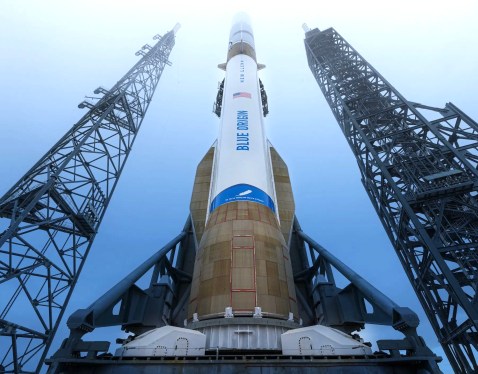
In this area, Blue Origin may have an advantage. Its New Glenn rocket, which debuted last year, is among the most powerful operational launch vehicles. If the company can achieve regular, reusable flights, it could benefit from vertical integration in a way similar to how SpaceX built its Starlink network.
Beyond technology and economics, the space environment presents its own challenges. Orbits near Earth are increasingly congested, and adding tens of thousands of new satellites raises collision risks. Furthermore, the standard practice of burning up obsolete satellites in the atmosphere may affect upper atmospheric chemistry, with researchers concerned about potential harm to the ozone layer.
The filing did not include a specific timeline, but experts suggest such ambitious projects are unlikely to become operational until the 2030s.