
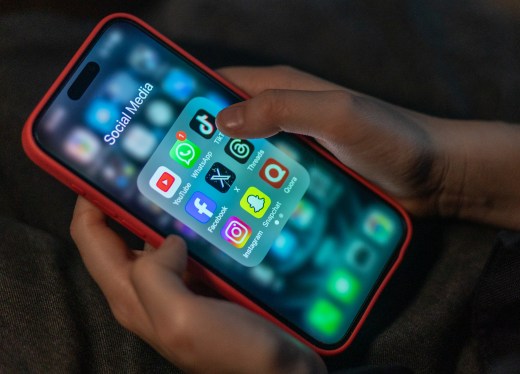
India could become the next major test case for age-based social media bans, as states weigh Australia-style restrictions on children’s access to platforms amid a growing global regulatory push.
The push has begun at the state level. The western state of Goa is the latest to study whether to bar children under 16 from social media platforms. Goa’s IT minister, Rohan Khaunte, stated this week that officials have pulled the relevant papers on Australia’s law and are studying them for possible implementation of a similar ban.
Similarly, the southern state of Andhra Pradesh is considering adopting Australia’s approach. The state’s IT and education minister, Nara Lokesh, suggested the move earlier this month, saying officials were studying Australia’s law and that a strong legal enactment is needed. The Andhra Pradesh government has already formed a Group of Ministers, chaired by Lokesh, to study the legal and practical feasibility of restrictions or a ban on minors’ access to social media.
This issue has also drawn judicial scrutiny. In December, the Madras High Court urged India’s federal government to consider Australia-style restrictions, highlighting how concerns about children’s online safety are driving regulatory debates beyond legislatures.
Any move to restrict children’s access to social media in India would carry significant implications for global technology companies, for which the South Asian nation is a critical growth market. Government estimates put India’s internet user base at more than one billion, with a large share of those users coming online at a young age. This makes the country central to the user and advertising strategies of platforms such as Meta, Google, and X.
A Meta spokesperson said the company shares the goal of creating safe, positive online experiences for young people but argued that parents, rather than governments, should decide which apps their teenagers use. The spokesperson warned that bans could push teens toward less safe, unregulated sites or experiences that bypass important protections.
Australia’s under-16 social media ban, passed through the Online Safety Amendment Act 2024 and taking effect in December 2025, has exposed enforcement challenges. Last year, Meta began notifying Australian teenagers that their accounts would be shut down, signaling the difficulty of accurately determining users’ ages. The law, which includes platforms like Twitch but exempts others such as Pinterest and Discord, has reignited concerns about digital age-verification systems and their associated privacy and security risks.
Australia’s move is being closely watched globally. Governments in countries including Denmark, France, Spain, Indonesia, and Malaysia are studying similar restrictions.
In India, experts note that internet governance falls under federal law. Kazim Rizvi of the think tank The Dialogue stated that states cannot amend national statutes like the Information Technology Act or the Digital Personal Data Protection Act. Therefore, states like Andhra Pradesh are likely to seek the central government’s support, an outcome that remains uncertain.
India’s Digital Personal Data Protection Act, passed in August 2023, includes specific protections for children’s data. It requires verifiable parental consent before processing personal data of individuals under 18 and prohibits tracking and targeted advertising directed at minors. However, the operational rules for these provisions are being phased in through 2027, giving platforms time to implement the required safeguards.
Google, Snap, and X did not respond to requests for comment. India’s IT ministry also did not respond when contacted.