
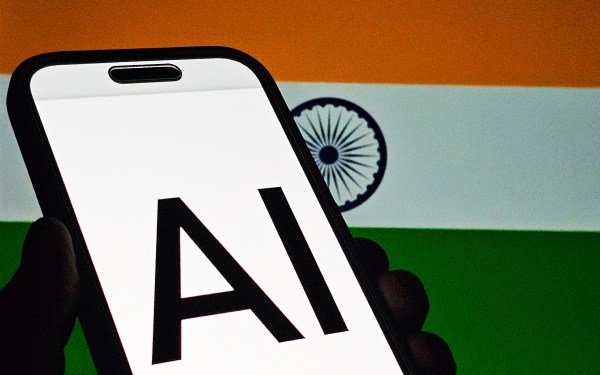
India has proposed a mandatory royalty system for AI companies that train their models on copyrighted content. This move could reshape how OpenAI and Google operate in what has already become one of their most important and fastest-growing markets globally.
On Tuesday, India’s Department for Promotion of Industry and Internal Trade released a proposed framework. It would give AI companies access to all copyrighted works for training in exchange for paying royalties to a new collecting body composed of rights-holding organizations. Payments would then be distributed to creators. The proposal argues this “mandatory blanket license” would lower compliance costs for AI firms while ensuring that writers, musicians, artists, and other rights holders are compensated when their work is used to train commercial models.
India’s proposal comes amid mounting global concerns over how AI companies train their models on copyrighted material. This practice has triggered lawsuits from authors, news organizations, artists, and other rights holders in the U.S. and Europe. Courts and regulators are still weighing whether such training qualifies as fair use, leaving AI firms operating under legal uncertainty.
Unlike the U.S. and the European Union, where policymakers are debating transparency obligations and fair-use boundaries, India is proposing one of the most interventionist approaches yet. It would give AI companies automatic access to copyrighted material in exchange for mandatory payment.
An eight-member committee formed by the Indian government in late April argues the system would avoid years of legal uncertainty while ensuring creators are compensated from the outset. Defending the system, the committee says a blanket license aims to provide easy access to content for AI developers, reduce transaction costs, and ensure fair compensation for rightsholders. It calls this the least burdensome way to manage large-scale AI training. The submission adds that the single collecting body would function as a “single window,” eliminating the need for individual negotiations and enabling royalties to flow to both registered and unregistered creators.
The committee also points to India’s growing importance as a market for generative AI tools. Citing OpenAI CEO Sam Altman’s remark that India is the company’s second-largest market after the U.S. and may well become its largest, it argues that because AI firms derive significant revenue from Indian users while relying on Indian creators’ work, a portion of that value should flow back. That is part of the rationale for establishing a balanced framework that guarantees compensation.
India’s proposal lands amid intensifying legal battles worldwide over whether AI companies can lawfully use copyrighted material to train their models. In India, news agency ANI sued OpenAI in the Delhi High Court, arguing its articles were used without permission. This case has prompted the court to examine whether AI training is itself an act of reproduction or protected by fair dealing. Courts in the U.S. and Europe are confronting similar disputes, with creators alleging that tech companies have built their models on unlicensed content.
Not everyone is convinced by the Indian government’s proposed model. Nasscom, the industry body representing technology firms including Google and Microsoft, filed a formal dissent. It argued that India should instead adopt a broad text-and-data-mining exception that would allow AI developers to train on copyrighted content as long as the material is lawfully accessed. It warned that a mandatory licensing regime could slow innovation and said rightsholders who object should be allowed to opt out.
The Business Software Alliance, which represents global tech firms including Adobe, Amazon Web Services, and Microsoft, pressed the Indian government to avoid a purely licensing-based regime. It urged India to introduce an explicit text-and-data-mining exception, arguing that relying solely on licensing for AI training data may be impractical and may not yield the best outcomes. Limiting AI models to smaller sets of licensed material, it warned, could reduce model quality and increase the risk that outputs simply reflect the biases of limited data sets.
The committee did not consider both a broad text-and-data-mining exception and an opt-out model, arguing such systems either undermine copyright protections or are impossible to enforce. Instead, it proposed a hybrid model that would grant AI firms automatic access to all lawfully available copyrighted works while requiring them to pay royalties into the central collecting body.
The Indian government has now opened the proposal for public consultation, giving companies and other stakeholders 30 days to submit their comments. After reviewing the feedback, the committee will finalize its recommendations before the framework is taken up by the government. OpenAI and Google did not respond to requests for comments.