
In 2023, after nearly three decades as CEO of the company he founded, Robert LoCascio stepped down from his role at LivePerson. This public firm is credited with pioneering web chat back in 1997. Advances in generative AI inspired his next project, which he describes as the highest bar for the technology: replicating human beings with their life stories and personality. In 2024, he founded and self-funded Eternos, a legacy service designed to let people preserve their voice and stories for loved ones after they pass away. The company has since undergone a rebranding and a shift in its mission.
The startup first gained significant media attention through its initial client, Michael Bommer, who was terminally ill. Bommer revealed how he worked with Eternos to create a digital replica of himself. This process involved spending twenty-five hours talking to the service about his life, his interests, and his worldview.
LoCascio was initially set on building a legacy business. However, he was surprised to find that most people considering the service were not preparing for death. This insight led to a new direction. The company developed the Human Life Model, a framework that uses only an individual’s personal data to capture their unique values, life story, and decision-making traits, rather than relying on general large language model data. LoCascio saw an opportunity to use this technology to help individuals create personal AIs for both professional and personal use.
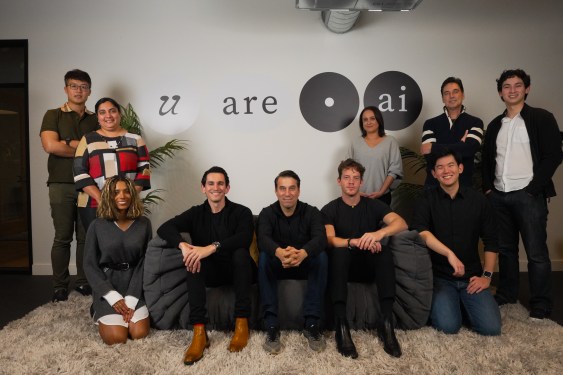
The company announced on a Tuesday that it has rebranded as Uare.ai and raised ten point three million dollars in seed funding. This funding round was led by Mayfield and Boldstart Ventures.
LoCascio explained his realization that large models are getting smarter by using our collective data. He stated that individuals do not have to accept that path. With Uare.ai, a person owns their own model and can choose to share it or monetize it.
The vision for Uare.ai is to function as a scaling tool for creators and professionals. Because the personal AI models contain an individual’s full expertise, a digital replica can be put to work generating content, handling customer interactions, and even executing projects.
Once the Uare.ai platform launches later this year, individuals will be able to train their Human Life Models. They will respond to questions from Uare.ai about their lives using text, voice, and video. The initial phase involves capturing a human life story, including details about childhood and significant life crossroads. The platform then asks for additional facts about the person’s life and profession. This blend of personal narrative and factual information creates the individual’s unique model.
Unlike other chatbots, Uare.ai’s model will not use general large language models to fill in gaps for questions outside its knowledge. If the model cannot answer a question based on the individual’s data, it will simply state that it does not know.
Uare.ai plans to generate revenue through subscription fees or by taking a share of the revenue that customers earn from their digital twins. Another startup in the personal AI space is Sequoia-backed Delphi, which has attracted people with large followings and enables interaction with replicated knowledge.
Navin Chaddha, managing partner at Mayfield, believes Uare.ai stands out from competitors because it targets individual professionals. He also cited the leadership of Robert LoCascio, a very successful entrepreneur, as a key advantage.