
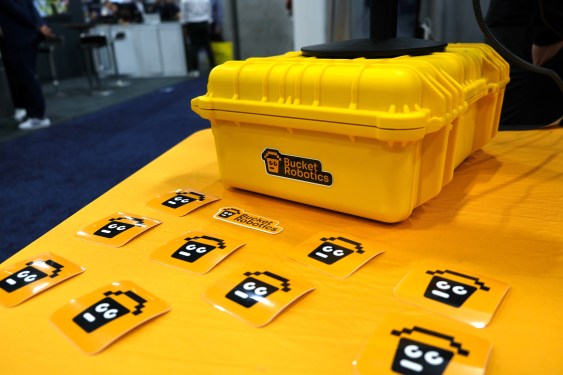
The weather in Las Vegas was not looking promising. The original plan for the YC-backed startup Bucket Robotics was for each employee to carry parts of their booth in their luggage to the 2026 Consumer Electronics Show. However, CEO and founder Matt Puchalski did not want to risk flight delays. He instead rented a Hyundai Santa Fe and packed it to the brim. He recalled with a laugh on the show floor that it was a tight fit. After a twelve-hour drive through the rain, both the gear and Puchalski arrived safely in Las Vegas, marking the young company’s first-ever CES.
Based in San Francisco, Bucket Robotics was just one of thousands of exhibitors at the massive tech conference, a small speck on a beach full of products and promises. Despite their modest setup in the automotive-focused West Hall, Puchalski believed the trip was entirely worthwhile. This success was fueled by a tireless, observant, and always-ready-to-pitch attitude.
An engineer by trade, Puchalski spent most of the past decade working on autonomous vehicles at companies like Uber, Argo AI, Ford’s subsidiary Latitude AI, and SoftBank-backed Stack AV. These roles gave him deep connections in the automotive industry, and our paths crossed multiple times throughout the week. I first encountered him during a hotel breakfast, where he and sales associate Max Joseph were preparing for the conference’s “Media Day.” His energy caught my attention, and after an introduction, he explained Bucket Robotics’s mission. Before I knew it, he had opened a bright yellow Pelican case and I was holding a small piece of plastic.
Bucket Robotics, which started as part of Y Combinator’s Spring 2024 batch, focuses on using advanced vision systems for quality inspections, specifically for surface defects. The goal is to automate a menial task that Puchalski jokingly said is usually done by “dudes in Wisconsin,” and to accelerate the broader effort to onshore manufacturing. He used the example of a car door handle. While structural inspection is a solved problem, ensuring a flawless surface—checking for correct color, burn marks, or scuffs—is much harder. Bucket Robotics aims to solve that.
He explained that it is deeply challenging to automate these inspections without huge volumes of data, which is why manufacturers often rely on manual labor. Bucket Robotics solves the data problem by starting with the CAD files for a part. The system then generates simulated defects—like burns, bumps, or breaks—so its vision software can learn to detect those problems quickly on a production line. This approach requires no manual labeling, and the company claims its models can deploy in minutes and adapt if products or lines change. A key selling point is that the software can integrate into existing production lines without adding new hardware.
This capability has already attracted customers in automotive and defense, setting Bucket Robotics on the path to becoming a “dual-use” company. When the CES show floor opened, Puchalski described the first two hours as intense. Attendees examined their tables, took logo stickers, and asked detailed questions. Importantly, he said the high level of interest remained consistent all week, leading to real technical discussions with people from manufacturing, robotics, and automation. In the week following the show, he was busy with follow-up calls from prospective customers and investors.
While CES can be a slog, Bucket Robotics survived it. Now comes the actual hard part: building the business, scaling, fundraising, and striking commercial deals. As for the “dudes in Wisconsin,” Puchalski does not see his company as a threat to their jobs. He noted those roles are as much about finding the root cause of defects as they are about spotting them. Besides, he added, automating surface quality inspection is a challenge the manufacturing industry has been trying to solve for decades. That is why, when they approach customers, the response is incredibly exciting.