
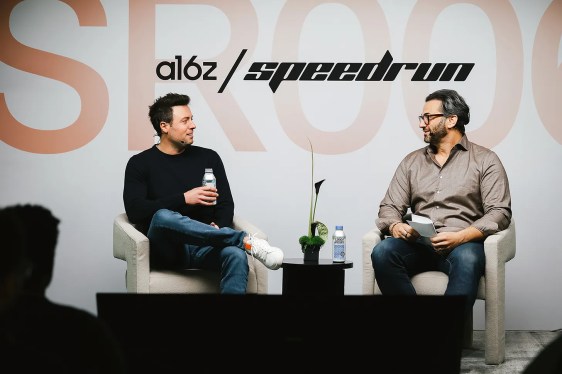
One of the most prominent new startup accelerators in technology today is Andreessen Horowitz’s Speedrun program. Launched in 2023, the accelerator is highly selective, with an acceptance rate of less than one percent. The program reported that over 19,000 startups applied for the latest cohort, and fewer than 0.4% were accepted.
The program initially focused on gaming startups, later expanded into entertainment and media, and is now a horizontal program open to founders of any startup type. The program runs for about 12 weeks in San Francisco. While it once had a Los Angeles program, the focus is now exclusively on San Francisco. Speedrun hosts two cohorts per year, each accepting between 50 and 70 startups.
The program invests up to one million dollars in each company. It typically provides $500,000 upfront in exchange for 10% of the startup via a SAFE note, with an additional $500,000 available if the startup raises its next round within 18 months, based on the terms set by the new investors. For comparison, Y Combinator typically takes 7% of a company for $500,000.
Speedrun describes its program as more “equity expensive” due to the resources it provides. Founders gain access to Andreessen Horowitz’s advisory and business networks, which assist with go-to-market strategy, brand development, media strategy, and talent sourcing. Startups also receive perks like five million dollars in credits from vendors such as AWS, OpenAI, Nvidia, and Deel.
Given the high interest and low acceptance rate, here is advice from the program’s general manager, Joshua Lu, on how startups can best stand out. The latest cohort began in January and will end in April with a Demo Day. Applications for the next cohort open in April, though the program reviews off-season applications year-round.
Focus on the founding team. Speedrun concentrates on early-stage startups and closely examines the founding team to ensure their skills complement each other. This does not mandate specific roles, but the program prefers not to see glaring holes in capabilities. They seek self-aware teams with a plan to address any gaps. Teams that have worked together before or share a history are viewed favorably, as this shared experience helps navigate challenges and disagreements.
While AI has lowered barriers to building software, having technical founders is still incredibly helpful. At the same time, because AI accelerates building and validation, the Speedrun team likes to see startups that already have some market validation or product traction. The program excels at helping teams amplify a small spark, so they look for teams that have built something demonstrating that initial spark.
Limit the market theory. A common mistake founders make is spending too much energy discussing market theory, the problem, and their solution. While this may be true, even the most successful companies often face unexpected obstacles and pivot. What matters more is why the founding team is uniquely qualified to solve the problem, supported by any validation for the idea itself.
It is okay to use AI for the application, but with caution. The program encourages founders to use AI to clean up grammar and spelling and to help clarify thoughts. However, if AI does all the work, it may backfire. Founders who advance to the video-call interview stage must be prepared to discuss their startup cogently without AI assistance. Only about 10% of applicants reach the video-call stage, which involves a panel of two to three investors. Following the interview, there are additional screening calls before a final decision is made.
Be greedy to network. While there are many accelerator programs, Speedrun prides itself on giving founders access to a large, specialized operating team. The founders who benefit most are those who actively seek exposure to the people and resources available. Andreessen Horowitz has about 600 people, with only 10% on the investment team; the rest are operators who support portfolio companies. Founders in Speedrun can connect with experts in marketing, banking, finance, management, and more. It helps if founders know who they want to connect with and why. The program believes founders get out what they put in, making it ideal for those who want to leverage world experts early in their journey.
Advice from a founder in the program. Mohamed Mohamed, a founder in the recent cohort, recently announced a five-million-dollar raise for his proptech startup, Smart Bricks. He was attracted to Speedrun as a program designed for co-founders working on frontier AI applications, where he could stress-test an ambitious technical vision.
He treated the application like an internal strategy memo rather than a pitch, focusing on clarity about the real problem, why it is structurally hard, and why his team is uniquely positioned to solve it. He was explicit about what was working, what was not, and where they needed help. He found the process rigorous but thoughtfully designed to understand how founders think, not just what they have built. The conversations delved into product architecture, data strategy, and long-term ambition, resembling a partner-level discussion.
His overall advice is to be intellectually honest and precise. He avoided over-optimizing or hyping his company. Being vague, derivative, or overly defensive shows quickly. Clarity about where you actually are is more compelling than an inflated narrative. Speedrun is not looking for perfect companies but for founders who can reason clearly about complex problems and build with conviction. Articulating the hard parts of what you are doing and why they are worth tackling is key; depth beats polish every time.