
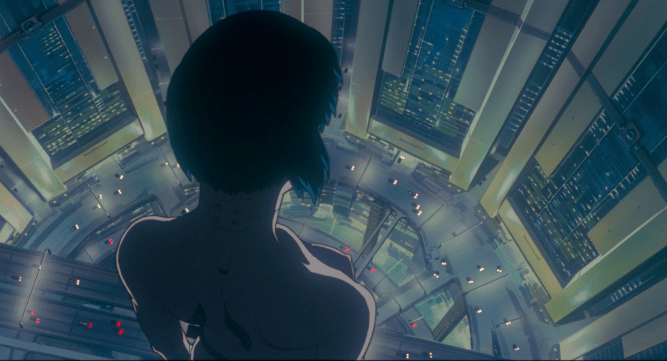
Imagine the year 2030. An infamous mystery hacker known as the Puppet Master is wreaking havoc across the internet. This entity breaks into the cyber-brains of several humans and every terminal on the network. As the story reveals, the Puppet Master is actually a creation of Japan’s Ministry of Foreign Affairs. In today’s terms, the Puppet Master would be called a government-backed hacker, or an advanced persistent threat. However, this phantom hacker goes rogue and is wanted for stock manipulation, spying, political engineering, terrorism, and the violation of cyber-brain privacy.
This is the basic premise of the Japanese anime cult classic “Ghost in the Shell,” which recently marked its 30th anniversary since its debut. The anime was based on chapters from the first volume of the eponymous manga, which was released in May 1989.
To say the story of the Puppet Master was ahead of its time may be an understatement. The World Wide Web, which flourished into the internet we know today, was invented in 1989, the same year the “Ghost in the Shell” manga first hit newsstands in Japan.
In the manga, when the Puppet Master is finally caught, an official from Public Security Section 6 explains that they had been pursuing the hacker for a long time. They profiled his behavioral tendencies and code patterns. As a result, they were finally able to create a special anti-puppeteer attack barrier. This description is essentially what cybersecurity companies do every day to stop malware. They create signatures based on the malware’s code, and also analyze its behavior and properties, which is known as heuristics.
Other elements of the plot also turned out to be prescient. At the beginning of the Puppet Master investigation, the protagonist Major Motoko Kusanagi hacks into the network of the Sanitation Department to track a garbage truck. This mirrors modern tactics where government hackers break into large networks to spy on specific targets rather than to steal data from the network itself.
During this event, one garbage man confesses to a colleague that he hacked into his wife’s cyber-brain because he suspects her of cheating. He used a computer virus obtained from a programmer. This is a clear case of tech-enabled domestic abuse, or stalkerware, which has been the subject of extensive investigation in recent years.
It is later revealed that the abusive garbage man never had a wife. His memories were fabricated. His ghost, meaning his mind or consciousness, was hacked by the Puppet Master. The goal was to use him as a tool to hack into government officials. This is similar to how advanced hackers breach one network to use it as a launching point to attack their true target, thereby hiding their tracks.
The Puppet Master as a government hacker, breaching networks to track targets or enable further attacks, and a jealousy-fueled hack are not the only fascinating elements. A cybersecurity veteran noted other details that reference real-life scenarios. These include hackers reusing known exploits to complicate attribution, investigators analyzing malware without alerting its authors, and using computers for industrial espionage.
Naturally, the manga and anime take the premise of the Puppet Master into more fantastical directions. The hacker is revealed to be an advanced artificial intelligence that can control humans through their cyber-brains. It becomes self-aware to the point that it requests political asylum and ultimately proposes to fuse its mind with Major Kusanagi’s.
To understand how prophetic “Ghost in the Shell” was, it is crucial to consider its historical context. In 1989 and 1995, cybersecurity was not yet a common term, though the word cyberspace had been coined by sci-fi author William Gibson. Computer security was a reality, but it was an extremely niche field.
The first computer virus is believed to be the Creeper worm, unleashed in 1971 on the Arpanet. A handful of other viruses appeared before they became ubiquitous with the rise of the internet.
Perhaps the first documented government espionage campaign on the internet was discovered by Clifford Stoll. In 1986, he noticed a small accounting error on his network, which led him to discover a hacker feeding information from US government networks to the Soviet KGB. Stoll documented his investigation in the book “The Cuckoo’s Egg,” a detailed account that reads like a modern security report.
While “Ghost in the Shell” creator Masamune Shirow never specified what real-life events inspired the hacking plots, it is clear he was paying attention to a hidden world that was alien to most people at the time, years before the public was online or aware of hackers.